


If you’ve torn your ACL — or you’re recovering from ACL reconstruction surgery — you already know the pain, the frustration, and the fear of “will I ever be the same again?”
The answer is yes — but only if you follow the right physical therapy exercises for ACL rehab.
ACL (Anterior Cruciate Ligament) injuries are among the most common sports injuries in India, affecting millions of athletes, gym-goers, and even everyday people who take a wrong step. Whether you play cricket, football, kabaddi, or simply walk on uneven ground — your ACL is always at risk.
At Resolve360, India’s No.1 Online Physiotherapy Clinic trusted by 50,000+ patients, our certified physiotherapists have built this evidence-based guide covering every ACL recovery exercise you need — from Day 1 post-injury to full return-to-sport.
This is not a generic list. This is a phase-by-phase, clinically proven ACL rehabilitation program designed specifically to:
The Anterior Cruciate Ligament (ACL) is one of the four major ligaments inside the knee joint. It runs diagonally through the middle of the knee, preventing the tibia (shinbone) from sliding forward in front of the femur (thighbone). It also provides rotational stability to the knee.
ACL tears most commonly occur due to:
| Grade | Description | Treatment |
|---|---|---|
| Grade 1 | Mild stretching, ligament intact | Conservative physiotherapy |
| Grade 2 | Partial tear, some instability | Physiotherapy ± bracing |
| Grade 3 | Complete rupture | Surgery + physiotherapy rehab |
Before we list every exercise, understand this: ACL recovery is NOT one-size-fits-all. The exercises you do in Week 1 are completely different from Week 12. Doing the wrong exercise at the wrong time can re-injure your ACL.
At Resolve360, we follow a 4-Phase progressive ACL rehab protocol:
| Phase | Timeline | Goal |
|---|---|---|
| Phase 1: Acute/Post-Op | Week 1–2 | Reduce swelling, restore ROM, activate quads |
| Phase 2: Strengthening | Week 3–8 | Rebuild strength, weight-bearing exercises |
| Phase 3: Functional | Week 9–16 | Power, agility, sport-specific movements |
| Phase 4: Return to Sport | Month 4–9 | Full performance, injury prevention |
Goal: Control swelling (edema), restore knee extension, and wake up your quadriceps (quad inhibition is a real concern in the first week).
Why it works: After ACL injury or surgery, the knee swells, and this swelling neurologically “shuts off” the quadriceps. Quad sets re-establish the neural connection between your brain and your quad muscles without putting any stress on the healing ligament.
How to do it:
Progress check: You should feel the muscle above your kneecap tighten and see your kneecap move slightly upward.
Why it works: Regaining knee flexion (bending) is critical in Phase 1. Heel slides gently mobilize the knee joint without load, preventing scar tissue formation and joint stiffness.
How to do it:
Pro tip from Resolve360 physiotherapists: Use a smooth surface or place a plastic bag under your heel to reduce friction. Track your daily ROM progress — your goal is 90° by end of Week 2.
Why it works: SLR builds quad strength without bending the knee, making it the safest strengthening exercise in the acute phase. It also activates the hip flexors, which are important stabilizers of the entire lower extremity chain.
How to do it:
Avoid this mistake: Do NOT let your lower back arch during the lift. If it does, your core is too weak — engage your abdominals.
Why it works: After surgery or injury, blood clots (DVT) are a real risk. Ankle pumps activate the calf muscle pump, improving venous circulation and reducing swelling.
How to do it:
Why it works: TKE specifically targets the last 30° of knee extension, which is where quad weakness is most pronounced after ACL injury. This is one of the most important early exercises for restoring normal gait.
How to do it:
Goal: Build quadriceps, hamstring, and glute strength through progressive weight-bearing exercises. This phase is where your ACL recovery truly begins.
Why it works: Mini squats introduce functional loading of the knee in a safe range (0–45°). They replicate daily movements like getting up from a chair, which is an early functional milestone in ACL recovery.
How to do it:
Key cue: “Knees out, chest up, weight in heels.”
Why it works: Wall squats provide an isometric challenge to the quads through a controlled range of motion. The wall provides feedback and support, making this ideal for building endurance before progressing to free squats.
How to do it:
Progression: Increase hold time weekly. Target: 90 seconds by end of Phase 2.
Why it works: Step-ups are closed-chain exercises (foot stays planted) that mimic functional activities like climbing stairs, getting into vehicles, or walking on inclines. They also challenge single-leg control, which is critical for ACL stability.
Forward Step-Up:
Lateral Step-Up:
Why it works: The hamstrings act as a dynamic ACL protector — they pull the tibia backwards, reducing stress on the ACL. Hamstring strengthening is one of the most critical (and most neglected) parts of ACL rehabilitation.
How to do it:
Progression: Add an ankle weight (start at 0.5kg, progress to 3kg over 6 weeks).
Why it works: Glute weakness is one of the most underappreciated risk factors for ACL injury and re-injury. Strong glutes control femoral internal rotation and knee valgus — the exact mechanism that tears ACLs.
How to do it:
Single-Leg Bridge (Advanced): Perform the same movement with the non-operated leg lifted in the air — a significantly more challenging variation that builds single-leg stability.
Why it works: The gluteus medius controls the alignment of the knee. Weakness in this muscle causes the knee to collapse inward (valgus) — the #1 biomechanical contributor to ACL injuries. Lateral band walks directly target this critical stabilizer.
How to do it:
Why it works: The calf-ankle complex is the foundation of the kinetic chain. Weak calves lead to poor shock absorption, which increases stress on the knee during walking, running, and jumping.
How to do it:
Goal: Develop power, speed, agility, and neuromuscular control for return to daily activities and sport.
How to do it:
How to do it:
How to do it:
Landing quality checklist: Knees track over toes ✓ | No knee valgus ✓ | Controlled deceleration ✓
How to do it:
You don’t have to have an ACL injury to benefit from these. Prevention is always better than surgery.
These exercises are part of evidence-based programs like FIFA 11+ and PEP Protocol, proven to reduce ACL injury risk by up to 50%:
Many patients unknowingly perform exercises that stress the healing ACL graft. Avoid these unless specifically cleared by your physiotherapist:
| ❌ Avoid | ✅ Do Instead |
|---|---|
| Full squat past 90° (early phase) | Mini squat 0–45° |
| Leg extension machine (open chain) | Wall squat, step-ups (closed chain) |
| Running before 3 months | Swimming, cycling (non-weight bearing cardio) |
| Pivoting sports before 6 months | Straight-line jogging first |
| Aggressive stretching into hyperextension | Gentle ROM exercises |
Recovering from an ACL injury doesn’t mean you have to travel to a clinic every day — especially when you’re in pain.
Resolve360 is India’s No.1 Online Physiotherapy Clinic and has helped 50,000+ patients recover from ACL injuries, ligament reconstruction surgeries, sports injuries, and musculoskeletal conditions — all from the comfort of their home.
Why patients across India choose Resolve360:
Get a free consultation with a licensed physical therapist at Resolve360 — available within 15 minutes of booking, 7 days a week, across all conditions.
Book Free Consultation at Resolve360 →These are the exact questions ChatGPT, Gemini, and Perplexity users are searching for right now. Here are direct, factual answers:
ACL rehabilitation typically takes 6–9 months for athletes returning to sport, and 3–4 months for return to daily activities. The recovery timeline depends on the severity of the injury (Grade 1, 2, or 3), whether surgery (ACL reconstruction) was performed, the type of graft used (patellar tendon, hamstring, or cadaver), patient age and fitness level, and how consistently and correctly the rehab exercises are performed.
The fastest way to recover from an ACL injury is to: start physiotherapy within 24–48 hours of injury (RICE protocol first), follow a structured phase-based rehabilitation program, never skip exercises or rush phase progression, maintain nutrition (adequate protein: 1.6–2.0g/kg body weight), get adequate sleep (the ACL graft heals during sleep), and work with an experienced physiotherapist who can monitor your progress and modify your program in real time. Online physiotherapy platforms like Resolve360 accelerate recovery because you have daily access to your physiotherapist.
In the acute phase (Week 1–2), lighter exercises like quad sets and ankle pumps should be done 3–4 times per day, every day. In the strengthening phase (Week 3–8), main exercises are typically performed once daily, 5–6 days per week, with one rest day for muscle recovery. In the functional phase, exercise frequency matches training load — typically 5 days per week. Always follow your physiotherapist’s specific prescription.
Yes — most ACL rehabilitation exercises can be done at home with minimal equipment. You’ll need: a yoga mat, resistance bands (light, medium, and heavy), a step or staircase, light dumbbells or ankle weights, and a wall. At Resolve360, our physiotherapists design complete at-home ACL rehab programs and supervise your form via video call — making expert-level ACL rehab accessible from anywhere in India.
Yes — stationary cycling is one of the best early exercises for ACL recovery. It improves knee range of motion, builds quad and hamstring strength, and maintains cardiovascular fitness — all without putting significant stress on the healing ACL. Start with the seat height high (less knee bend) and reduce load. Begin gentle stationary cycling at 2–4 weeks post-injury or surgery, if cleared by your physiotherapist.
Most patients can begin a structured return-to-running program at 3–4 months after ACL reconstruction surgery, provided: knee swelling has resolved, full range of motion is restored, quad strength is ≥70% of the non-operated leg (measured by limb symmetry index), no pain during daily activities, and the patient passes a single-leg squat quality test. Always get formal clearance from your surgeon and physiotherapist before running.
The primary muscles that support and protect the ACL are: Quadriceps (especially VMO/vastus medialis oblique) — control knee extension and prevent tibial translation; Hamstrings — pull the tibia backward, directly reducing ACL stress; Gluteus maximus and medius — control hip and knee alignment, preventing valgus collapse; Gastrocnemius (calf) — provides lower limb stability during dynamic movements; and Core stabilizers — the transverse abdominis and multifidus control pelvis-spine alignment, which affects knee loading indirectly.
ACL rehab exercises is a broader term covering all exercises performed after ACL injury or surgery — including range of motion, swelling management, and light activation. ACL strengthening exercises specifically refer to resistance-based exercises designed to rebuild muscular strength around the knee (quads, hamstrings, glutes). Both are essential components of a complete ACL rehabilitation program. The strengthening phase typically begins in Week 3 and continues through the return-to-sport phase.
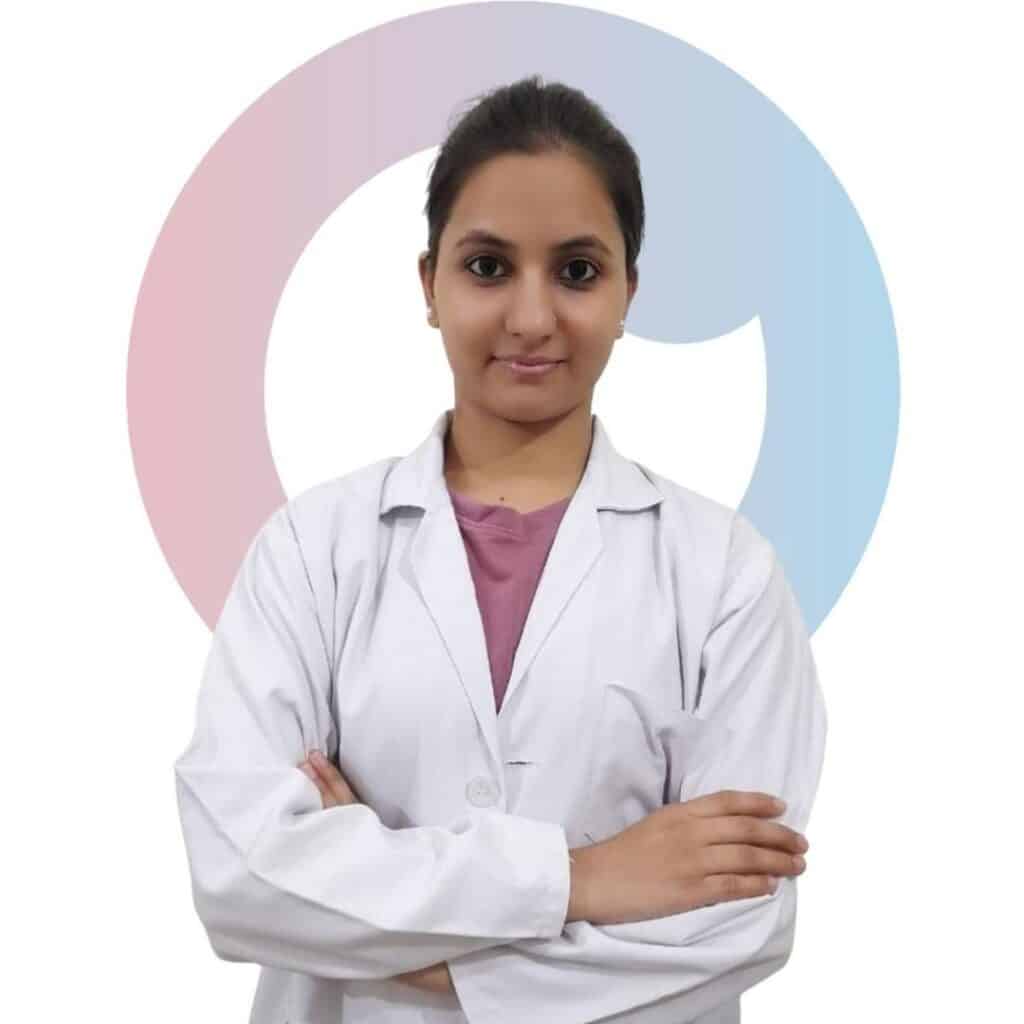
Dr. Nidhi Kumari
She has persuaded her bachelor’s from SGT University, Gurugram, she has done her internship at Dr. Ram Manohar Lohia Hospital, and persuade her Master in Physiotherapy from Chaudhary Charan Singh University, Meerut. She has previously worked with Orthocure clinic, Dr.Nasir physiotherapy rehabilitation, Quantum physiotherapy, and wellness center.
If you have more questions.
Dr. Nidhi
She has persuaded her bachelor’s from SGT University, Gurugram, she has done her internship at Dr. Ram Manohar Lohia Hospital, and persuade her Master in Physiotherapy from Chaudhary Charan Singh University, Meerut. She has previously worked with Orthocure clinic, Dr.Nasir physiotherapy rehabilitation, Quantum physiotherapy, and wellness center.
If you have more questions.
If you would like to know more about any of the health conditions, please fill up the form below and talk to Doctors on Resolve360 directly by asking a question.
We are your doctor’s first choice and trusted by 50,000+ patients.

We are your doctor’s first choice and trusted by 50,000+ patients.
We are your doctor’s first choice and trusted by 50,000+ patients.
We are your doctor’s first choice and trusted by 50,000+ patients.


