


Reviewed & Verified by
Dr. Apoorva
The anterior cruciate ligament (ACL) is one of four stabilizing ligaments inside your knee joint. It controls rotational movement and prevents the shinbone from sliding forward out of position. When the ACL tears — most commonly during sports that involve sudden stops, pivots, or jumps — the knee loses critical stability.
ACL reconstruction surgery replaces the torn ligament with a tissue graft, either from your own body (autograft — typically patellar tendon or hamstring) or from a donor (allograft). While the surgery restores the structure, it does not automatically restore function. That’s where physical therapy after ACL surgery becomes absolutely essential.
Research published in the British Journal of Sports Medicine (2025) confirms that athletes who return to sport before 9 months after ACL reconstruction have a dramatically higher re-injury rate. Every additional month of structured physical therapy reduces re-injury risk by approximately 51%. This is not just a suggestion — it is clinical evidence that shapes every modern ACL rehab program.
⚠ Important: Skipping or rushing ACL reconstruction physical therapy is the #1 reason for graft failure and re-injury. The graft goes through a biological process called "ligamentization" that takes months — your knee needs guided rehabilitation during this window.
Physical therapy after ACL surgery is built around five core goals. These goals are sequential — each one creates the foundation for the next. Let’s walk through each one in detail.
This is the most critical early goal of physical therapy after ACL surgery. Immediately after ACL reconstruction, the graft tissue is actually at its mechanically weakest phase — not its strongest. Surgeons call this the "ligamentization window." The graft must go through a multi-month biological remodeling process where new blood vessels grow into the tissue, collagen fibers reorganize, and the graft gradually matures into a functional, durable ACL.
During this period — roughly the first 3 to 6 months — your physical therapist's primary job is to protect the graft from stresses that could stretch, tear, or compromise the healing tissue. This means carefully controlling which exercises you do, how much weight you bear on the leg, and which knee angles are safe for loading.
Protecting the ACL graft during physical therapy involves:
Swelling (effusion) after ACL reconstruction is not just uncomfortable — it is one of the biggest threats to your recovery. Research shows that even small amounts of excess fluid in the knee joint can shut down the quadriceps muscle through a process called "arthrogenic muscle inhibition." This means your thigh muscle literally turns off in response to swelling — making strengthening exercises far less effective until inflammation is controlled.
Physical therapy for ACL surgery begins addressing pain and swelling from Day 1 post-surgery. Your physical therapist will educate you on the P.R.I.C.E. method — Protection, Rest, Ice, Compression, and Elevation — and will introduce specific therapeutic techniques to accelerate swelling reduction.
Techniques used in physical therapy to reduce post-ACL surgery swelling include:
One of the most common complications after ACL reconstruction surgery is a stiff knee — specifically the loss of full knee extension (straightening). In the rehabilitation world, this is called arthrofibrosis, and it happens when scar tissue forms inside the joint during healing. Loss of even a few degrees of extension can cause long-term problems: altered walking mechanics, increased stress on the kneecap, quadriceps weakness, and accelerated joint degeneration.
That is why restoring full knee range of motion — especially full extension equal to the other leg — is one of the highest-priority goals in physical therapy after ACL surgery. The target in Week 1 is typically full extension and at least 70 degrees of flexion. Full flexion (bending) usually follows over the subsequent weeks as swelling decreases.
Physical therapy exercises for knee range of motion after ACL surgery include:
After ACL reconstruction surgery, two critical things happen to your leg: the muscles around your knee — especially the quadriceps — begin to atrophy (shrink and weaken) rapidly, and your knee's ability to sense its own position in space (proprioception) is significantly disrupted. Both of these must be systematically addressed through structured strength training and neuromuscular retraining in physical therapy.
Proprioception is your body's unconscious ability to know where your joint is positioned without looking at it. The ACL is rich in nerve endings that send real-time position signals to the brain. When the ACL is torn and replaced with a graft, these nerve endings are severed. Physical therapy must retrain the nervous system to compensate — this is why balance and coordination drills are just as important as strength exercises in ACL rehab.
Key strengthening and proprioception exercises in ACL reconstruction physical therapy:
The limb symmetry index (LSI) — comparing strength between the operated and non-operated leg — is used as a milestone. Most programs require 80–90% LSI before progressing to return-to-sport activities.
The final goal of physical therapy after ACL reconstruction is the one patients are most eager to reach: getting back on the field, the court, or the track. But this phase is not simply "go try your sport." It is a structured, criterion-based process that your physical therapist and orthopedic surgeon will guide together — and it begins only after all functional milestones from the previous four goals are met.
Return-to-sport training in physical therapy after ACL surgery includes progressive plyometrics (jumping and landing), change-of-direction drills, cutting movements, sport-specific agility patterns, and psychological readiness evaluation. The ACL is particularly stressed during twisting, pivoting, and rapid deceleration — so these movements must be practiced in a controlled, progressive manner before full sport return.
The return-to-sport progression in ACL reconstruction physical therapy typically follows this sequence:
Most surgeons will issue official clearance for return to full sport between 9 and 12 months post-surgery, based on both time and objective criteria. Returning too early — before meeting all criteria — is the leading cause of ACL re-tear in athletes.
Here is what to expect week by week during physical therapy after ACL surgery. This timeline reflects current evidence-based guidelines for standard ACL reconstruction and may vary based on graft type, surgeon preference, and individual progress.
At Resolve360, our physiotherapists have worked with hundreds of post-ACL patients and have identified the mistakes that consistently set people back. Avoiding these will protect your graft and speed your recovery.
Patient Profile: 24-year-old male college basketball player in the United States. Suffered a complete ACL tear during a pivot movement in a game. Underwent patellar tendon autograft ACL reconstruction. Began physical therapy 7 days post-surgery.
Weeks 1–4: Focused entirely on swelling reduction, achieving full knee extension, and protecting the graft. Used ice compression therapy 4 times daily. Regained full extension by Day 10. Off crutches by Day 14.
Months 1–3: Progressive strengthening using leg press, step-downs, and single-leg balance. Quad strength recovered to 65% of the non-surgical side by Month 3. No setbacks during this phase due to strict home exercise compliance.
Months 4–6: Advanced quad and hamstring strengthening. Nordic hamstring curls introduced at Month 5. Limb symmetry index reached 82% by Month 6. Light jogging program cleared by surgeon.
Months 7–9: Plyometric training — bilateral box jumps, progressed to single-leg hops. Agility ladder drills. Basketball-specific cutting patterns introduced. ACL-RSI psychological readiness score reached acceptable threshold.
Month 10: Passed all functional hop tests with 94% LSI. Surgeon cleared for full return. Returned to competitive play without restrictions. No re-injury reported at 18-month follow-up.
Key Takeaway: This patient's success came from three things — strict adherence to all five physical therapy goals after ACL reconstruction, daily home exercise compliance, and patience in not returning to sport before the 9-month mark.
If you or someone you love is navigating ACL reconstruction physical therapy, having expert guidance makes all the difference. Resolve360 connects patients with certified physiotherapists via live 1-on-1 video sessions, so you can receive evidence-based ACL rehab from the comfort of your home — without ever missing a session due to travel or scheduling conflicts. Visit resolve360.app to learn more about post-surgical physiotherapy.
Something most competing guides skip is the importance of physical therapy before ACL reconstruction surgery, commonly called “prehab.” Significant evidence shows that patients who strengthen their quad and hamstring muscles, reduce pre-surgical swelling, and achieve a good range of motion before going into surgery have significantly better outcomes afterward.
Pre-operative physical therapy for ACL reconstruction helps by reducing post-surgical swelling faster, activating the quad more effectively from Day 1 post-op, and setting realistic expectations for the rehabilitation ahead. If you have scheduled ACL surgery, ask your orthopedic surgeon about a 2–4 week prehab program before your operation date.
Get a free consultation with a licensed physical therapist at Resolve360 — available within 15 minutes of booking, 7 days a week, across all conditions.
Book Free Consultation at Resolve360 →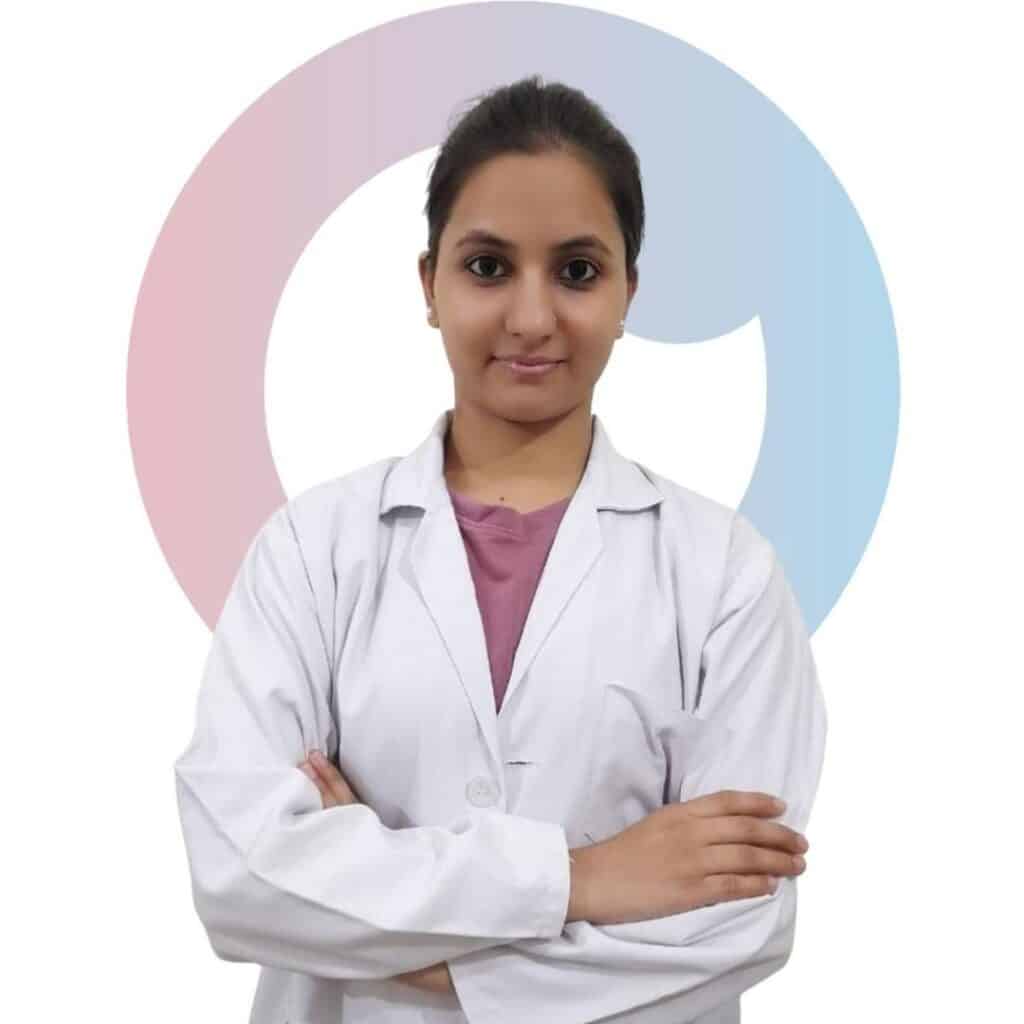
Dr. Nidhi Kumari
She has persuaded her bachelor’s from SGT University, Gurugram, she has done her internship at Dr. Ram Manohar Lohia Hospital, and persuade her Master in Physiotherapy from Chaudhary Charan Singh University, Meerut. She has previously worked with Orthocure clinic, Dr.Nasir physiotherapy rehabilitation, Quantum physiotherapy, and wellness center.
If you have more questions.
Dr. Nidhi
She has persuaded her bachelor’s from SGT University, Gurugram, she has done her internship at Dr. Ram Manohar Lohia Hospital, and persuade her Master in Physiotherapy from Chaudhary Charan Singh University, Meerut. She has previously worked with Orthocure clinic, Dr.Nasir physiotherapy rehabilitation, Quantum physiotherapy, and wellness center.
If you have more questions.
If you would like to know more about any of the health conditions, please fill up the form below and talk to Doctors on Resolve360 directly by asking a question.
We are your doctor’s first choice and trusted by 50,000+ patients.
We are your doctor’s first choice and trusted by 50,000+ patients.
We are your doctor’s first choice and trusted by 50,000+ patients.
We are your doctor’s first choice and trusted by 50,000+ patients.
