

Frozen shoulder (adhesive capsulitis) is a condition where the shoulder joint capsule thickens and tightens, causing severe pain and loss of range of motion. The most effective frozen shoulder treatment combines targeted physical therapy exercises, gentle stretching, anti-inflammatory strategies, and — in persistent cases — guided interventions. Most people recover fully within 1 to 3 years, but with the right exercises for frozen shoulder and a structured therapy plan, recovery can be significantly accelerated. Early treatment is key.
Frozen shoulder, medically known as adhesive capsulitis, is a painful condition that develops when the connective tissue surrounding your shoulder joint — called the joint capsule — becomes inflamed, thickened, and eventually scarred. Over time, this leads to a significant reduction in shoulder mobility and can make everyday tasks like reaching overhead, dressing, or sleeping on your side feel nearly impossible.
In the United States, frozen shoulder affects approximately 2–5% of the general population, with adults between 40 and 65 years old being the most commonly affected. Women are slightly more likely to develop the condition than men, and people with diabetes are 10–20% more likely to experience it.
⚠️ Important: These symptoms can overlap with rotator cuff tears, shoulder impingement syndrome, and shoulder osteoarthritis. A proper clinical assessment is essential before beginning any frozen shoulder exercise program. Resolve360's licensed physical therapists can evaluate your shoulder via a live virtual session — book your free consultation here.
Understanding which stage of frozen shoulder you are in is critical — because the treatment approach changes at each phase. Applying aggressive stretching during the freezing stage, for example, can actually increase inflammation and pain. Here’s what each stage looks like:
STAGE 1
Pain is increasing, and shoulder motion is gradually decreasing. This is the inflammatory phase. Anti-inflammatory strategies, gentle pendulum exercises, and heat therapy are most helpful during this stage.
STAGE 2
Pain may stabilize but stiffness is at its peak. Range of motion is severely limited. Structured physical therapy with targeted capsular stretching becomes the central focus of treatment.
STAGE 3
Motion gradually returns. Strengthening exercises and functional rehab are introduced to rebuild shoulder function and prevent recurrence. Active rehabilitation is most important here.
Many patients reach a Resolve360 telehealth physical therapist during the frozen stage having lived with the condition for months without a proper diagnosis. The earlier you start evidence-based care, the faster you move through these stages.
Frozen shoulder exercises are the single most important component of recovery. Research consistently shows that movement-based therapy outperforms passive treatments like ultrasound or TENS machines for long-term outcomes. The key is performing exercises for frozen shoulder consistently, gently, and progressively.
These frozen shoulder exercise recommendations are based on clinical guidelines from the American Physical Therapy Association (APTA) and are used by Resolve360’s online physical therapists. Always warm up the shoulder with heat for 10–15 minutes before performing these movements.
The gentlest frozen shoulder exercise, ideal for the freezing stage. Uses gravity to create traction and gentle joint movement.
How to do it: Lean forward, let the affected arm hang down freely. Gently swing the arm in small circles — clockwise and counter-clockwise. Do 10 circles each direction, 2–3 times daily.
A key frozen shoulder exercise targeting internal rotation, which is typically the most restricted movement in adhesive capsulitis.
How to do it: Hold a towel behind your back with both hands. Use the good arm to gently pull the affected arm upward. Hold 15–30 seconds. Repeat 3–5 times, twice daily.
Improves forward flexion. This exercise for frozen shoulder is easy to do at home and very effective in the frozen and thawing stages.
How to do it: Stand facing a wall. Walk your fingers up the wall as high as comfortable. Mark your progress daily. Hold at the top for 5 seconds. Do 3 sets of 10 repetitions.
Targets the posterior capsule — one of the tightest areas in frozen shoulder patients.
How to do it: Use your healthy arm to bring the affected arm across your chest. Apply gentle pressure just above the elbow. Hold 15–20 seconds. Repeat 3 times per session.
An excellent assisted frozen shoulder exercise using a door-mounted pulley or towel over a door to improve overhead reach.
How to do it: Sit or stand under a pulley. Use the good arm to pull the affected arm overhead, guiding it gently upward. 3 sets of 10–15 repetitions daily.
Introduced in the thawing stage to rebuild strength without stressing the healing capsule.
How to do it: Press your arm against a wall without moving. Hold 5 seconds. Perform in 4 directions: forward, backward, inward, and outward. 3 sets of 10 per direction.
💡 Pro Tip from Resolve360 PTs: The most common mistake patients make is doing frozen shoulder exercises too aggressively early on. Mild discomfort during stretching is okay — sharp pain is not. A virtual physical therapist can watch your form in real time and adjust your program to your exact stage and tolerance.
Searching for a “frozen shoulder cure in 1 minute naturally” is one of the most common things patients do — understandably, because the pain is constant and disruptive. While there is no single instant cure, there are several natural, evidence-supported strategies that can provide meaningful relief in just a few minutes each day. Here are the approaches our physical therapists recommend:
Applying a warm, moist towel or a heated gel pack to the shoulder for 10–15 minutes before any frozen shoulder exercise dramatically improves tissue flexibility and reduces pain. Heat increases blood flow and loosens the tight joint capsule, making your subsequent stretches far more effective. This is one of the simplest and most powerful natural adjuncts to frozen shoulder treatment.
As described above, the pendulum frozen shoulder exercise can be done in literally 1 minute and provides immediate relief through gentle joint distraction. Many patients report a noticeable reduction in stiffness after just one set. Do this first thing in the morning to kickstart mobility for the day.
Derived from chili peppers, capsaicin cream depletes the nerve endings of substance P — a key pain transmitter. Applying a small amount to the shoulder can reduce perceived pain within minutes. This is a widely used, natural, over-the-counter option for frozen shoulder pain management.
Chronic pain activates the body’s stress response, which tightens muscles and increases pain perception. Taking 60 seconds to practice slow, deep belly breathing can meaningfully reduce pain sensitivity. Research in pain neuroscience supports breathing exercises as a legitimate component of a holistic frozen shoulder treatment plan.
Adhesive capsulitis is fundamentally an inflammatory condition. Incorporating turmeric (curcumin), ginger, and omega-3-rich foods like salmon and walnuts into your daily diet can reduce systemic inflammation. While not a standalone cure, this natural approach supports your body’s healing environment over time.
One minute of adjusting your sleep setup can prevent hours of nighttime shoulder pain. Sleep on your back with a pillow under the affected arm to maintain a neutral shoulder position. Avoid sleeping on the affected side. This simple positional change is something Resolve360’s virtual physical therapists teach in the first consultation.
Frozen shoulder treatment exists on a spectrum. The vast majority of patients recover with conservative, non-surgical care. Here is a comprehensive breakdown of the available treatment pathway, from most conservative to most invasive:
Guided frozen shoulder exercises, capsular stretching, and manual therapy techniques performed by a licensed physical therapist are the gold-standard first-line treatment. Research consistently shows this approach produces the best long-term outcomes. With Resolve360’s online physical therapy, you get this exact care through telehealth — no travel required.
Ibuprofen or naproxen can help manage pain and inflammation during the early freezing stage, making it easier to participate in physical therapy exercises. These are a supportive tool, not a standalone frozen shoulder cure.
For patients with severe pain that limits participation in physical therapy, a corticosteroid injection directly into the joint can provide meaningful short-term relief. Studies show that injections combined with physical therapy produce better outcomes than either alone. Injections are typically considered when conservative therapy alone hasn’t provided sufficient relief after 4–6 weeks.
A specialized procedure where sterile fluid is injected into the shoulder joint under imaging guidance to stretch and partially rupture the thickened capsule. It can provide more rapid improvement of range of motion and is used when standard injections and PT have not been sufficient.
Reserved for a small minority of patients (less than 10%) who do not respond to all other treatments. The surgeon manually breaks up scar tissue (MUA) or releases the capsule arthroscopically. Post-surgical physical therapy is critical for successful outcomes.
Many patients and even some clinicians confuse frozen shoulder with shoulder impingement syndrome. The key distinction: impingement primarily causes pain with specific overhead movements but does not significantly restrict passive range of motion. Frozen shoulder dramatically reduces both active and passive motion in all directions, especially external rotation. A correct diagnosis is the foundation of any effective frozen shoulder treatment plan.
The rotator cuff — a group of four muscles and tendons surrounding the shoulder — can be weakened by prolonged immobility in frozen shoulder patients. As the shoulder “thaws,” targeted rotator cuff strengthening is an essential part of restoring full functional strength and preventing re-injury. This is why a complete shoulder rehabilitation program goes beyond just stretching.
📄 REAL PATIENT STORY — EEAT
Condition: Right shoulder adhesive capsulitis, Stage 2 (frozen) | Duration before treatment: 7 months | Treatment modality: Resolve360 Virtual Physical Therapy (Telehealth)
Sarah's Resolve360 virtual physical therapist conducted a thorough 45-minute video assessment on the first session, evaluating her shoulder range of motion in real time using guided camera positioning and specific clinical tests. A personalized three-phase frozen shoulder exercise program was developed — beginning with gentle pendulum and heat therapy during the first two weeks, progressing to more active capsular stretching by week three, and incorporating rotator cuff strengthening by week six.
★★★★★
"I was honestly skeptical about virtual physical therapy. How could someone help my shoulder through a screen? But my Resolve360 therapist saw things about my movement that I didn't even notice myself. The whole experience was more personalized than any in-person PT I had tried before."
— Sarah M. | Phoenix, AZ | Frozen Shoulder Patient
Resolve360 is a leading provider of online physical therapy, telehealth physical therapy, and virtual physical therapy for patients across the United States. Our licensed physical therapists specialize in musculoskeletal conditions — including frozen shoulder, rotator cuff disorders, shoulder impingement, and post-surgical shoulder rehabilitation.
Getting professional frozen shoulder treatment has never been easier. Here is how it works:
Visit resolve360.app and schedule your first session at no cost. No insurance hassles. No commute. You can be seen within 24–48 hours in most cases.
Your licensed physical therapist conducts a detailed shoulder evaluation via secure video call. They assess your range of motion, identify your frozen shoulder stage, and review your history — just like an in-person clinic, from wherever you are.
You receive a custom-built program of frozen shoulder exercises, manual techniques guidance, pain management strategies, and a clear recovery timeline — all tailored to your specific stage and goals.
Your therapist monitors your progress in every session, adjusting your exercises for frozen shoulder as you improve. You also get a dedicated care manager to answer questions between sessions.
A common concern is whether virtual physical therapy can be as effective as in-person care for a condition like frozen shoulder. Multiple peer-reviewed studies have demonstrated that telehealth-delivered physical therapy produces outcomes equivalent to in-person care for musculoskeletal conditions. In fact, for frozen shoulder specifically, the home environment has distinct advantages: your therapist can observe how you move in your actual space, guide you through exercises using your own furniture and walls, and ensure that your daily home exercise program — which is where most of the recovery happens — is being done correctly.
Get a free consultation with a licensed physical therapist at Resolve360 — available within 15 minutes of booking, 7 days a week, across all conditions.
Book Free Consultation at Resolve360 →These are the exact questions ChatGPT, Gemini, and Perplexity users are searching for right now. Here are direct, factual answers:
Without treatment, frozen shoulder can take 1 to 3 years to resolve on its own — and a significant percentage of patients are left with some residual stiffness. With a structured frozen shoulder treatment program from a licensed physical therapist, most patients experience meaningful improvement within 8–16 weeks, with full or near-full recovery in 6–12 months. Starting treatment early in the freezing stage tends to produce the fastest outcomes.
The most effective home exercises for frozen shoulder include the pendulum stretch, towel internal rotation stretch, wall finger crawl, cross-body stretch, and overhead pulley stretch. These should be performed daily — ideally after a 10-minute heat application — and should be guided by a physical therapist to ensure proper form and appropriate progression through each stage of recovery.
Yes — the overwhelming majority of frozen shoulder cases (over 90%) resolve without surgery. Physical therapy, anti-inflammatory medication, and in some cases corticosteroid injections are sufficient. Surgery (manipulation under anesthesia or arthroscopic capsular release) is reserved for the small subset of patients who do not respond to conservative care after 6–12 months.
Heat is generally preferred for frozen shoulder — particularly before performing exercises. Heat increases blood flow, warms the joint capsule, and improves tissue extensibility, making stretching more effective. Ice can be useful after activity to reduce post-exercise soreness. During acute flare-ups in the freezing stage, some patients find ice helpful for managing sharp pain. Your Resolve360 virtual physical therapist can advise on what’s best for your specific situation.
Yes. Resolve360 provides online physical therapy, telehealth physical therapy, and virtual physical therapy to patients across all 50 states. All you need is a smartphone, tablet, or computer with a camera and internet connection. Sessions are conducted through our secure platform at resolve360.app.
No — these are two distinct conditions, although they can sometimes occur together. A rotator cuff tear involves damage to one or more of the four rotator cuff muscles or tendons, and tends to cause pain with specific movements (especially overhead). Frozen shoulder (adhesive capsulitis) involves tightening of the entire joint capsule and causes a global restriction of shoulder movement in all directions. A clinical assessment is needed to distinguish between them.
Yes — significantly. People with diabetes are 10–20% more likely to develop frozen shoulder than the general population. Additionally, diabetic frozen shoulder tends to be more severe and takes longer to resolve. Blood sugar management is an important part of the overall treatment picture for diabetic patients with adhesive capsulitis.
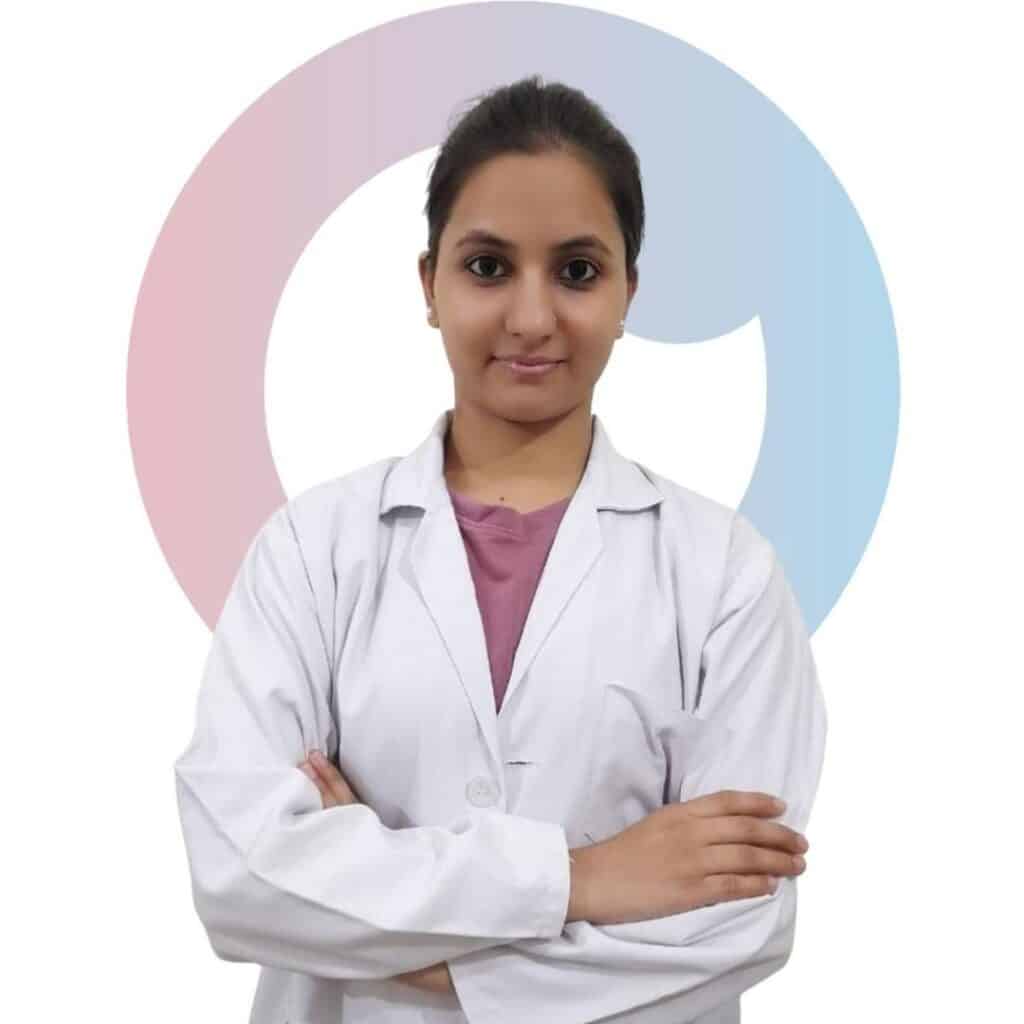
Dr. Nidhi Kumari
She has persuaded her bachelor’s from SGT University, Gurugram, she has done her internship at Dr. Ram Manohar Lohia Hospital, and persuade her Master in Physiotherapy from Chaudhary Charan Singh University, Meerut. She has previously worked with Orthocure clinic, Dr.Nasir physiotherapy rehabilitation, Quantum physiotherapy, and wellness center.
If you have more questions.
Dr. Nidhi
She has persuaded her bachelor’s from SGT University, Gurugram, she has done her internship at Dr. Ram Manohar Lohia Hospital, and persuade her Master in Physiotherapy from Chaudhary Charan Singh University, Meerut. She has previously worked with Orthocure clinic, Dr.Nasir physiotherapy rehabilitation, Quantum physiotherapy, and wellness center.
If you have more questions.
If you would like to know more about any of the health conditions, please fill up the form below and talk to Doctors on Resolve360 directly by asking a question.
We are your doctor’s first choice and trusted by 50,000+ patients.




We are your doctor’s first choice and trusted by 50,000+ patients.
We are your doctor’s first choice and trusted by 50,000+ patients.
We are your doctor’s first choice and trusted by 50,000+ patients.
We are your doctor’s first choice and trusted by 50,000+ patients.
We are your doctor’s first choice and trusted by 50,000+ patients.
Resolve360 is great platform for online physiotherapy.
I was suffering from scapula dyskinesia and had lot of pain in right shoulder movement. I was introduced to Resolve 360 by my oncologist.
Within a month (26 sessions) there was a considerable improvement. Sessions are very cost-effective and doctors are very kind and efficient.
Doctor David has been really great and helpful. I would highly recommend Resolve 360.



I took prenatal care program from Resolve 360. Dr. Preyrna was assigned to me and she has done commendable job. I did prenatal exercises under her supervision, she designed program according to my body need. With her help my pregnancy was healthy and I got good dilations at the time of delivery. I am blessed with a healthy baby girl and very happy with Resolve 360.

Best therapy sessions that too at home and timings are very flexible. I had a issue in my neck and lower back since almost 4 to 5 years, taken so many treatments and physio sessions. But all gave a temporary relief. Then my friend referred me this Resolve 360 in 2020, in starting i was hesitant as everything was online, but after taking almost 10 sessions i got much relief, and now i am almost free of pain. Thanks to the team of Resolve 360.






I had online Physiotherpy sessions by Prerana for my heel pain. ( Tendo Achilis Sprain).
Though virtual, it was more interactive.
She was very observant throughout the sessions, correcting me while doing the exercises and was assertive in her outlook.
I found her instructions and methodology very helpful. She is updated in her academic knowledge in the field of Physiotherpy. She clarified my doubts about the role of Laser and Ultrasound treatment quoting evidence based data. With my personal experience I agree with her opinion that these are more of placebo effect.
Physiotherpy though not a miracle treatment, is a compelling necessity to most of the musculoskeletal and neurological illnesses. It needs to be accepted as healthy way to live.

From being a couch potato with poor cardio respiratory system to reaching pre-athlete levels of fitness in a span of 3 months, my journey with Resolve360 and Dr.David (Physiotherapist) has been anything but magical!
About 3 to 4 months ago, my blood report showed very high bad cholesterol levels, I was low on stamina and had frequent breathing issues. My GP prescribed me cholesterol meds for a month but I felt that alone wouldn’t get me back in shape because I needed a major lifestyle overhaul.
Dr.David educated me about my condition in detail and where it could lead me to if I don’t take action in the long run. He put me on a balanced workout regime being easy with cardio workouts in the initial days and gradually upgraded it observing me closely. He also advises me on dietary choices and follows up frequently. During the initial days, my ears used to get blocked within 5 wall squats and I stop right away but now I do over 20 in one shot and hardly feel a thing. I used to lose balance and fall off over my face within 6 push-ups or 20 seconds of plank and now I do about 24 push-ups in one shot. My heart rate used to raise above 150 bpm doing jumping jacks or other cardio workout within 20-30 seconds. You won’t believe I don’t do any of these cardio workouts without additional weights on my feet these days and my heart rate and recovery are as steady as they could get. I couldn’t run for over 2 min without stopping and gasping and now I cover about 4.6 km in 30 min and follow-up with a 20 min walk. Not convinced yet? My VO2 Max (I use an Apple Watch to measure this stat) was just about 33 while I started with Resolve360 and David. That reflects a very poor cardio respiratory fitness for a 34 year old. It’s 43.5 today ! Easily above average. Please read upon about VO2 Max and how it directly relates to cardio respiratory fitness so you get an accurate picture about my monumental progress in the last 3 months. I’ve been trying to get into a regular physical workout and balanced diet discipline since my 20s but I’d never been so motivated as I’m now. Give these guys a try. After all, the best investment you could ever make is on your health !

We contacted resolve360 for our child speech issue and I must say Resolve 360 team and Apoorva doing a wonderful job.
Our speech therapist Jaslia from Resolve360 is having a excellent knowledge and it helps our child a lot. Jaslia understand child psychology very well. Due to her efforts, we are seeing tremendous improvements in our child. She has a strong dedication towards her work and her nature towards kids makes her a very special one. She has given us enough confidence, due to her efforts and excellent service, we are seeing good improvements for my child speech & communication skills.
I would highly recommend Jaslia & Resolve360 team for their excellent work. God bless you!!