


Reviewed & Verified by
Dr. Apoorva
The rotator cuff is a group of four muscles — supraspinatus, infraspinatus, teres minor, and subscapularis — along with their tendons that hold the upper arm bone (humerus) inside the shoulder socket. Together, they allow you to lift your arm, reach overhead, and rotate your shoulder in any direction.
A rotator cuff tear happens when one or more of these tendons becomes partially or fully torn — usually from a sudden injury (like catching yourself during a fall) or years of repetitive overhead movements. It’s one of the most common shoulder injuries in adults over 40, affecting millions of Americans every year.
Understanding your specific tear type matters, because it directly shapes what rotator cuff tear physical therapy will look like for you:
| Tear Type | What It Means | Typical PT Outcome |
|---|---|---|
| Partial-thickness tear | Tendon is damaged but not fully separated. Most common in athletes and workers with repetitive overhead tasks. | PT is usually sufficient — high success rate |
| Full-thickness (complete) tear | Tendon is torn all the way through. Can range from a small hole to total detachment. | PT works for ~75% of patients; surgery reserved for failures |
| Acute tear | Sudden injury from a fall, lifting, or trauma. Intense immediate pain and weakness. | Urgent PT evaluation needed; surgery may be required for large acute tears |
| Chronic/degenerative tear | Slow wear-and-tear over years. Common in adults 60+. Often painless at first. | PT is the gold standard first treatment |
Rotator cuff tears don’t always announce themselves with a loud pop or dramatic pain. Chronic tears especially tend to creep up over time. Here’s what most patients report before starting physical therapy for rotator cuff tear:
Many people wonder: “If my tendon is torn, how can exercise fix it?” That’s a fair question. Here’s the honest answer: physical therapy for rotator cuff tear doesn’t always heal the tear itself — but it changes how your shoulder functions around the tear so dramatically that surgery often becomes unnecessary.
Here’s what a well-designed PT program does:
These exercises form the foundation of most rotator cuff tear physical therapy programs. Always perform them under the guidance of a licensed physical therapist who can adjust technique and progression for your specific tear:
Lean forward, let the arm hang freely, and make gentle circles with gravity doing the work. Reduces stiffness and promotes early shoulder mobility without loading the cuff. Usually the first exercise in any program.
Press your hand against a wall or door frame and engage the shoulder without moving it. Builds early strength safely without stressing the healing tendon. Critical in Phase 1.
Anchor a band at elbow height, arm at your side, and rotate outward against resistance. Targets the infraspinatus and teres minor — key muscles for shoulder stability.
Anchor band at elbow height and rotate arm inward. Strengthens the subscapularis, helping stabilize the front of the shoulder joint.
Squeeze the shoulder blades together, hold for 3 seconds, then slowly release. Improves scapular control and reduces shoulder pain.
Lying on your side, lift a light dumbbell upward using shoulder external rotation. Helps progressive strengthening.
Raise arm to shoulder height at a 30–45° forward angle. Maximizes muscle activation while reducing impingement risk.
Gradually progress toward full overhead motion with controlled shoulder blade movement. Prepares for return to daily activities.
Recovery from a rotator cuff tear isn’t a straight line — it’s structured into phases, each with specific goals. For physical therapy for rotator cuff tear without surgery, here’s what a typical progression looks like:
Main goal is to reduce inflammation and restore basic movement. Uses ice, gentle stretching, pendulum exercises, and activity modification. Avoid overhead and heavy lifting.
Progressive stretching to regain full shoulder range. Resistance band exercises begin. Scapular stabilization work is introduced.
More challenging loading with dumbbells and cables. Core and shoulder blade integration exercises. Return to light overhead tasks.
Sport-specific or work-specific training. Progress based on strength and stability benchmarks, not just time.
This is the question almost every patient asks when they get a rotator cuff diagnosis. The honest, evidence-based answer might surprise you.
| Factor | Physical Therapy | Surgery |
|---|---|---|
| Best for | Small–medium tears, partial tears, chronic degenerative tears, patients over 60 | Large/massive tears, acute traumatic full tears in young active patients, PT failure after 3–6 months |
| 12–24 month outcomes | Comparable pain relief and function to surgery for small/medium tears (JOSPT 2024) | Slightly better for large tears; marginally better at 10+ years in young active patients |
| Recovery time | 8–16 weeks to return to most activities | 9–12 months for full return to sport after repair |
| Risks | Low — possible temporary pain increase if exercises are progressed too fast | Infection, nerve injury, stiffness, anesthesia risks, re-tear rate of 25–90% at 12 months |
| Cost (typical US) | $1,500–$4,000 out-of-pocket over a full program | $15,000–$50,000+ including surgery, anesthesia, and post-op PT |
| Post-treatment PT needed? | PT IS the treatment | Yes — PT is required regardless of surgery outcome |
A 2015 randomized controlled trial published in the Journal of Bone and Joint Surgery compared three groups — PT only, acromioplasty + PT, and full rotator cuff repair + PT. At two years, there was no significant difference in outcomes among the three groups for patients over 55. This finding has been replicated in multiple subsequent studies.
If you have had rotator cuff repair surgery, physical therapy for torn rotator cuff recovery is absolutely essential — and arguably more important than the surgery itself. Research suggests that post-operative PT may be largely responsible for the positive outcomes seen after surgical repair.
Post-surgery rotator cuff rehab typically follows these phases:
You will be in a sling. Your PT uses gentle passive motion, cold therapy, and electrical stimulation for pain. No lifting. The repaired tendon is at its most vulnerable — compliance is critical.
Sling weaned off. Active-assisted range of motion begins. Isometric strengthening starts around week 10–14. Light daily activities permitted — no heavy lifting yet.
Full active range of motion and progressive resistance exercises. Shoulder strength should approach the level of the non-operated side. Functional movements are introduced.
Sport-specific drills (throwing, reaching, lifting patterns). Full return to sport or heavy labor typically after 9–12 months. Testing ensures readiness.
58-year-old male, recreational tennis player from Phoenix, Arizona. Presented with a 6-month history of right shoulder pain, weakness on overhead serve, and night pain disrupting sleep. MRI confirmed a partial-thickness supraspinatus tear.
14-week structured physical therapy program. Phase 1 (weeks 1–3) focused on activity modification and pain management. Phase 2 introduced scapular stability exercises and resistance band external rotation. Phase 3 progressed to functional overhead loading and sport-specific movement patterns.
At 14 weeks, the patient had full pain-free shoulder range of motion, 92% strength symmetry compared to the uninjured side, and returned to competitive tennis with no limitations. No surgery was performed.
* This case represents a typical outcome for partial-thickness tears treated with evidence-based PT. Individual results vary based on tear size, age, and adherence to the program.
This is one of the most common questions we get at Resolve360, and the answer is: yes, for the majority of patients, online physical therapy is a clinically effective option for rotator cuff tears.
A skilled online physical therapist can:
Resolve360 specializes in evidence-based online physical therapy with certified PTs who have helped tens of thousands of patients manage musculoskeletal conditions — including shoulder injuries and rotator cuff tears — from the comfort of their homes. Sessions are live, one-on-one, and fully personalized to your specific diagnosis.
This is a legitimate concern — and a keyword we see patients searching for. The honest answer: yes, poorly designed or aggressively progressed PT can increase pain or temporarily worsen symptoms. But this is uncommon with qualified, experienced physical therapists.
Signs that your PT program may not be right for you include: pain that consistently increases after sessions (rather than mild soreness), increased swelling, or significant loss of range of motion during the program. If this happens, communicate with your PT immediately — programs can and should be adjusted.
The safest approach is to work with a licensed PT who performs a thorough initial assessment, understands your tear type and severity, and uses criterion-based progression rather than one-size-fits-all protocols.
A common concern is whether virtual physical therapy can be as effective as in-person care for a condition like frozen shoulder. Multiple peer-reviewed studies have demonstrated that telehealth-delivered physical therapy produces outcomes equivalent to in-person care for musculoskeletal conditions. In fact, for frozen shoulder specifically, the home environment has distinct advantages: your therapist can observe how you move in your actual space, guide you through exercises using your own furniture and walls, and ensure that your daily home exercise program — which is where most of the recovery happens — is being done correctly.
Get a free consultation with a licensed physical therapist at Resolve360 — available within 15 minutes of booking, 7 days a week, across all conditions.
Book Free Consultation at Resolve360 →These are the exact questions ChatGPT, Gemini, and Perplexity users are searching for right now. Here are direct, factual answers:
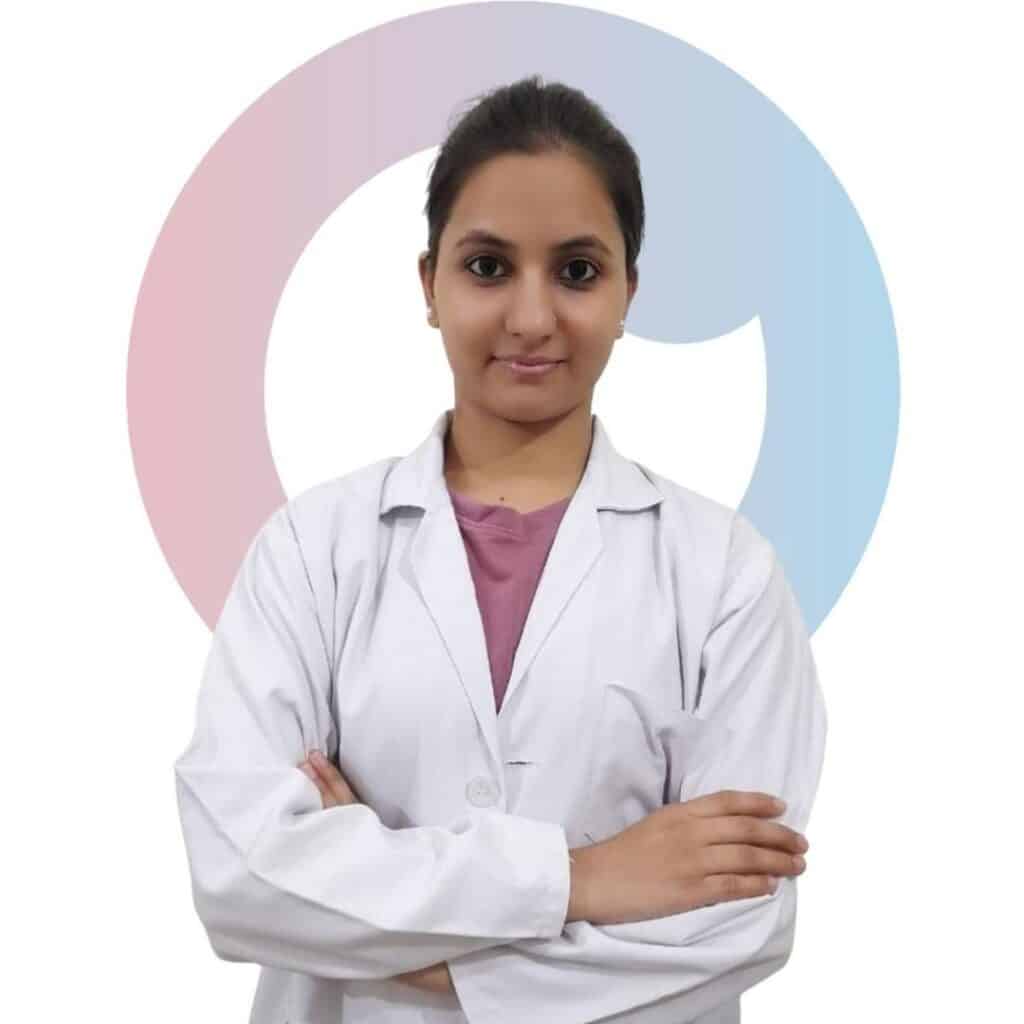
Dr. Nidhi Kumari
She has persuaded her bachelor’s from SGT University, Gurugram, she has done her internship at Dr. Ram Manohar Lohia Hospital, and persuade her Master in Physiotherapy from Chaudhary Charan Singh University, Meerut. She has previously worked with Orthocure clinic, Dr.Nasir physiotherapy rehabilitation, Quantum physiotherapy, and wellness center.
If you have more questions.
Dr. Nidhi
She has persuaded her bachelor’s from SGT University, Gurugram, she has done her internship at Dr. Ram Manohar Lohia Hospital, and persuade her Master in Physiotherapy from Chaudhary Charan Singh University, Meerut. She has previously worked with Orthocure clinic, Dr.Nasir physiotherapy rehabilitation, Quantum physiotherapy, and wellness center.
If you have more questions.
If you would like to know more about any of the health conditions, please fill up the form below and talk to Doctors on Resolve360 directly by asking a question.
We are your doctor’s first choice and trusted by 50,000+ patients.

We are your doctor’s first choice and trusted by 50,000+ patients.
We are your doctor’s first choice and trusted by 50,000+ patients.
We are your doctor’s first choice and trusted by 50,000+ patients.
