


Reviewed & Verified by
Dr. Apoorva

To relieve back pain from standing too long, change position before the ache builds. Shift your weight, rest one foot on a low step, walk for a minute or two, or sit when you can. After your shift, keep moving gently and try heat. See a physical therapist or doctor if pain spreads down a leg, causes numbness or weakness, or keeps coming back.
Get emergency care right away if back pain follows a fall or accident, comes with a fever, or comes with new trouble controlling your bladder or bowels, numbness in the groin or inner thighs, or leg weakness that’s getting worse
We are your doctor’s first choice and trusted by 50,000+ patients.
Speak to a licensed physical therapist before you commit to anything.
If your lower back aches after a long shift at a register, a nurses’ station, a salon chair or a kitchen line, you’re not alone. Standing still for hours tires your back, and the ache usually gets better with simple changes. This guide covers why standing hurts, how to get relief during and after work, how to set up your workspace, and which symptoms need a professional.
Standing still keeps the same back and hip muscles working with few breaks, so they tire and ache. Hard floors, worn shoes and some back conditions can make it worse.
In lab studies, healthy people with no back pain stood for two hours while doing light tasks. Across these studies, about 40% to 70% of them developed lower back discomfort. For most, it faded afterward.2
Studies of workers show a similar link. In a large 2018 review, people who stood for more than four hours a workday were somewhat more likely to report lower back pain than people who stood less. The researchers measured about 30% higher odds.1 Most of those studies looked at a single point in time. That means they show a link, not proof that standing causes pain, and they don’t show that standing permanently damages your spine.
Staying in one spot without moving is the main factor. Hard floors, unsupportive shoes, standing with a strong arch in your lower back, and existing spine conditions can add to it.
Often it’s simply relief from a tiring position. But pain that builds with standing or walking and eases when you sit or lean forward can also be a sign of lumbar spinal stenosis.
Lumbar spinal stenosis is a narrowing of the space around the nerves in the lower spine, often linked to aging. Its symptoms usually get worse with standing or walking and ease when you sit down or lean forward, for example on a shopping cart.7 Most people with a backache from standing don’t have stenosis. If your symptoms match this pattern, especially with leg heaviness, tingling or numbness, get it checked instead of guessing.
| What You Notice | What It May Point To (Not a Diagnosis) | Next Step |
|---|---|---|
| A dull ache across the lower back that builds during your shift and eases when you move or sit. | Usually common, nonspecific back pain associated with staying in one posture. | Try the self-care steps in this guide and monitor whether they help over the next few weeks. |
| Back pain plus leg heaviness, tingling or cramping when standing or walking, relieved by sitting or leaning forward. | May fit a spinal stenosis pattern. | Arrange an evaluation with a physical therapist or doctor. |
| Pain that shoots below the knee, or numbness in one leg or foot. | Possible nerve irritation, such as sciatica. Read more about back pain that radiates into your legs. | Arrange an evaluation. Seek care sooner if weakness develops. |
| Bladder or bowel changes, groin numbness, worsening leg weakness, fever, or pain after a fall. | May indicate a serious condition. | Seek emergency medical care immediately. |
Change position before the ache builds. Shift your weight, rest one foot on a low step, take a short walk, or sit for a moment. Small, frequent changes work better than one long break.
Keep moving gently, use heat if it feels good, and avoid spending the whole evening lying down. Health experts don’t recommend bed rest for most back pain.
MedlinePlus, from the U.S. National Library of Medicine, says that if you have no signs of a serious cause, you should stay as active as you can. An easy walk or light chores usually help more than resting on the couch all night.
Heat is a good first choice. A major guideline from the American College of Physicians (ACP) recommends starting with non-drug treatments for new back pain, and heat has the strongest evidence among them. Use a heating pad or warm pack for 15 to 20 minutes with a cloth between it and your skin. Some people prefer cold, especially in the first couple of days of a flare. Don’t use heat or cold on skin that feels numb, and ask your doctor first if you have diabetes or circulation problems.
Start with easy moves like pelvic tilts, a single knee-to-chest stretch and a relaxed 10-minute walk. Go slowly, stay in a comfortable range, and stop if pain spreads into your leg.
These are common starting points, not a personal prescription. Begin with about 5 to 10 slow repetitions.
For a short flare, the ACP guideline lists NSAIDs such as ibuprofen or naproxen as an option. In the research it reviewed, acetaminophen didn’t help new low back pain.
Follow the label. Ask a pharmacist or doctor before using pain relievers if you have stomach, kidney or heart problems, take blood thinners, or are pregnant.
The most common mistake is going straight from a long shift to lying on the couch all evening. Others include pushing through pain, forcing deep stretches, and ignoring leg symptoms.
| Mistake | Try This Instead |
|---|---|
| Collapsing on the couch or in bed for the rest of the night | Take a short, easy walk first, then rest in positions that feel comfortable. Staying active is standard advice for most back pain. |
| Pushing through the ache until the shift ends | Change position when the ache starts. Responding early may help you manage discomfort before it builds. |
| Jumping straight into deep or forceful stretches | Warm up with a few minutes of easy walking or gentle movement. Stretch only to mild tension, never into sharp pain. |
| Falling asleep on a heating pad | Set a 15–20-minute timer and keep a cloth layer between the pad and your skin to reduce the risk of burns. Follow the device instructions. |
| Brushing off leg tingling or numbness | Leg symptoms warrant an evaluation. Seek urgent medical care if weakness is worsening. [6] |
| Wearing the same worn-out work shoes for years | Inspect your shoes. If the cushioning feels flat or the heel is worn unevenly, consider replacing them. Footwear alone may not address the cause of back pain. |
Plan a small position change every 30 to 60 minutes, a short walk at every break, and gentle movement after work. Avoid standing more than 2 hours straight without a mat, footrest, stool or supportive shoes.
That 2-hour limit comes from a professional guideline cited in the NIOSH review. It says workers shouldn’t stand more than 2 hours at a time, or more than 30% of the workday, without tools that reduce fatigue. Use this plan as a starting point and adjust it to your job. For 10- or 12-hour shifts, repeat the middle rows.
| When | What to Do | Why It Helps |
|---|---|---|
| Before your shift | Put on supportive shoes and walk for a few minutes. Identify somewhere you can sit or rest one foot. | Makes it easier to change position throughout the shift. |
| Hour 1 | Alternate which foot rests on the rail every few minutes. Keep your knees relaxed. | Introduces movement before fatigue builds. |
| Every 30–60 minutes | Take a 1–2-minute walk, change your stance or sit briefly. | Breaks up long periods of standing still. |
| First break (about 2 hours in) | Sit down or take a short walk instead of remaining in one spot. | Limits uninterrupted standing time. |
| Lunch (about 4 hours in) | Sit while eating, then take a short walk if comfortable. | Provides a break from prolonged standing. |
| Afternoon break (about 6 hours in) | Walk or sit briefly. Change your weight-bearing position more often if fatigue builds. | Helps manage discomfort that may increase later in the shift. |
| End of shift (8 hours) | Take an easy walk, try gentle movements and use heat if it helps. | Supports comfortable recovery without prolonged bed rest. |
| Each week | Ask yourself: Is the pain better, unchanged, worse or spreading? | Helps you decide whether to continue self-care or seek an assessment. |
Stand on an anti-fatigue mat, wear supportive shoes, keep a footrest nearby, and use a stool when your tasks allow. These changes mainly reduce tiredness and discomfort, and they’re low risk.
The NIOSH review found that some of these tools can reduce the strain of standing at work. It also called for better research, because most studies measure comfort and fatigue rather than long-term back pain.
If you need changes at work, ask your supervisor, HR or safety team. A specific request, like a mat at your register or a stool at your station, is easier to approve.
Neither, all day. Switching between sitting, standing and walking is easier on your back than staying in one position for hours.
Workplace guidance on standing favors mixing positions, and sit-stand options are among the tools it reviews. If you sit for long periods instead, similar habits apply. See our tips for lower back pain from driving. If sitting always relieves pain that standing or walking brings on, especially with leg symptoms, tell a clinician. That pattern helps narrow down the cause.
Get emergency care for back pain after a fall or accident, with fever, with new bladder or bowel problems, or with worsening leg weakness. Book a visit if pain lasts over four weeks or spreads down a leg.
Call 911 or go to the emergency room if your back pain comes with any of these signs.
Make an appointment with a physical therapist or doctor if your pain lasts, spreads, or keeps coming back.
Self-care is a reasonable start when the ache eases with movement and is improving. Get a professional opinion when pain spreads, lingers, or limits your work or sleep.
| Self-Care Is a Reasonable Start | Get a Professional Assessment |
|---|---|
| Pattern | |
| The ache builds with standing and eases with movement or rest. | Pain spreads to a leg or comes with numbness, tingling or weakness. |
| Trend | |
| Symptoms improve over days to a few weeks. | Symptoms are not improving after a few weeks or are getting worse. |
| Impact | |
| Pain is annoying but manageable. | Pain limits work, sleep or daily activities. |
| Medical History and Warning Signs | |
| No major health concerns or warning signs. | History of cancer, recent injury, osteoporosis, unexplained weight loss or fever warrants prompt medical assessment. |
A physical therapist looks at how your back responds to standing, walking and bending, checks your strength and nerves, and reviews your job setup. Then they build a plan around exercise and activity.
For long-lasting low back pain, the ACP guideline recommends exercise and other non-drug treatments as the first step.
Often, yes. For many people with uncomplicated back pain, video visits can cover assessment, exercise coaching and work-setup advice. Online care can’t replace a hands-on exam or emergency care.
The research is promising but not settled. A review of 53 earlier reviews found that physical therapy by video could work about as well as in-person care, or better than no care, for conditions including low back pain. The results weren’t always consistent. A 2026 analysis of long-lasting back pain found that online rehab did well for pain at 8 to 12 weeks, with low to moderate certainty. In-person care may still matter when you need closer supervision.
| Video visits can usually | Video visits can't |
|---|---|
| Take a detailed history and track your symptom pattern | Do a hands-on exam, like feeling muscles and joints or testing reflexes with a hammer |
| Watch you stand, walk, bend and move, and check your work posture on camera | Order or replace imaging or lab tests when you need them |
| Teach and progress exercises and adjust your shift plan | Provide hands-on treatment |
| Screen for warning signs and tell you when you need in-person care | Replace emergency care for red-flag symptoms |
In many cases, no. Every US state allows some form of “direct access,” which means you can see a physical therapist without a doctor’s referral. Many states add limits, like a cap on visits or days.
According to the American Physical Therapy Association (APTA), as of July 2025 all 50 states, Washington, D.C., and the U.S. Virgin Islands allow direct access. In 21 states it’s unrestricted. The rest set conditions, such as time or visit limits or a referral for certain treatments. For many people, that means you can book an online physical therapy evaluation with Resolve360 without first getting a doctor’s referral. That can save you a separate appointment and the wait that comes with it. If you plan to use health insurance, check your plan, because some insurers still require a referral for coverage.
Only if they’re authorized under your state’s rules. In the US, physical therapy is regulated by the state where you are during the visit, so ask any provider before you book.
If your back pain from standing keeps coming back despite self-care, online physical therapy services in the USA can be a practical next step, with no commute after a long shift. To learn more, see how online physical therapy works, whether online physical therapy can help with sciatica, and what physical therapy costs without insurance.
Start With a $0 Free Root Cause Analysis
A live 1:1 video consultation with a senior physical therapist. Customized plans from $48 per session.
Exact pricing depends on your specific condition and clinical severity.
Standing still keeps your back muscles under steady, continuous strain without a break. Walking keeps changing the load and gives muscles a chance to contract and relax. That’s why short walks and stance changes often ease the ache. If walking also brings on leg symptoms that ease when you sit, get it checked.
Sitting simply relieves your lower back from the tiring posture of fighting gravity. However, pain that gets worse with standing or walking and eases when you sit or lean forward is also a typical sign of lumbar spinal stenosis, especially in older adults.7 A clinician can tell which applies to you.
There’s no good evidence that it does. Research links long hours of standing at work with more lower back pain. It doesn’t show permanent damage to the spine, and the authors of a major review called the evidence tentative.1 Pain that lasts or spreads should still be checked.
Yes, they can make standing much more comfortable, though they aren’t a cure for back pain. NIOSH reviewed mats as one way to reduce the strain of standing at work. Most of the evidence measures comfort and tiredness, not long-term back pain.3 Pair a mat with regular movement.
They primarily help your legs, but this can indirectly make your back feel better. Studies of workers on long standing shifts found that 15–20 mmHg stockings reduced leg discomfort and swelling.12,13 Less tired legs make a shift feel easier overall, reducing compensatory strain on your back. Ask a doctor first if you have circulation problems or diabetes.
Look for a stable, supportive shoe with good arch support, a wide toe box, a firm midsole, and a low heel. No single study has named one “best” shoe for back pain. Try shoes on later in the day when your feet are larger, walk on a hard floor in the store, and replace them when the cushioning feels flat. On concrete, pair them with a mat if you can.
For most people, yes. About 90% of long-lasting low back pain has no specific cause such as a fracture, infection or pinched nerve.9 US guidelines recommend exercise and other non-drug care first.4 A physical therapist can’t guarantee results, but most people with standing-related back pain never need surgery.
Heat is generally better for muscle aches caused by standing. Heat has the stronger evidence for new low back pain.4 Some people prefer cold for the first day or two of a flare.5 Use whichever helps you move more comfortably, and protect your skin.
A standing-related ache often eases within a few hours of changing position or resting. The ACP notes that most new low back pain gets better over time no matter which treatment people use.4 There’s no set timeline. Pain that lasts more than about four weeks, or gets worse, should be checked
meet your expert
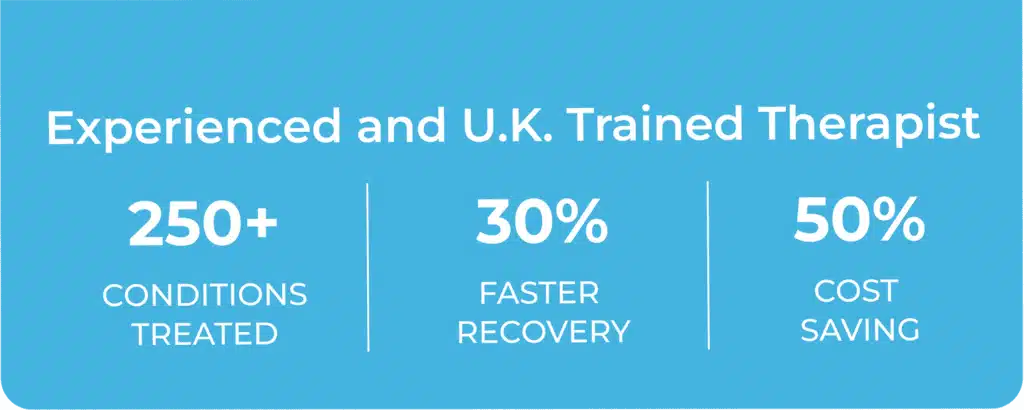
Dr. Apoorva Shrivastava is a senior physical therapist, clinical rehabilitation leader and Founder & CEO of Resolve360 with 20+ years of experience in physiotherapy and rehabilitation. She has supported 50,000+ patients globally and has experience across 250+ conditions, including chronic pain, sciatica, disc bulge, frozen shoulder, cervical spondylosis, lumbar spondylosis, back pain, neck pain, shoulder pain and knee pain. She holds a Bachelor’s in Physiotherapy from Saveetha Medical College and a Master’s in Advancing Physiotherapy from Sheffield Hallam University, UK, with a major focus on Neuro Physiotherapy. Her experience includes St Helier’s Hospital, NHS, UK, PAN-India clinical training and leadership involving 500+ physical therapist across India.
Posted on Google
 Indu G
Trustindex verifies that the original source of the review is Google.
I came across a Resolve360 ad and decided to give them a try for my knee pain. I contacted them, and their team got in touch with me and explained everything clearly. I had my online physiotherapy session with Dr. Sandeep, and I had a really good experience. He was patient, friendly, and took the time to understand my pain and daily routine before suggesting exercises. He explained each exercise properly and showed me how to do the movements correctly. I could also ask questions during the session, which made things much easier. I really liked the convenience of doing the sessions from home. I didn’t have to travel to a clinic, and the one-on-one sessions felt personal and comfortable. The follow-up sessions were also helpful and kept me motivated to stay consistent with the exercises. A special thanks to Dr. Sandeep for being so supportive and easy to talk to. He made the whole process feel simple and comfortable. Overall, I’m happy with my experience with Resolve360 and would recommend them to anyone looking for convenient online physiotherapy.Posted on Google Kashika SinghI am currently recovering from ACL reconstruction surgery, and choosing the Resolve360 video rehabilitation platform has been one of the best decisions for my recovery journey. When I joined the platform, I was not only recovering from surgery but was also suffering from severe back pain that significantly limited my mobility. Surprisingly, after just two sessions, I experienced noticeable relief in my back pain, which gave me the confidence to continue my rehabilitation. What I appreciate the most is that every exercise is carefully tailored to my specific condition, recovery stage, and individual needs. The structured rehabilitation plan has kept me consistent and motivated. Without this platform, I don't think I would have had such a well-organized approach to my recovery. A special thanks to Dr. Diksha for her exceptional expertise. She has an incredible ability to understand the root cause of pain and provide effective solutions, even through remote consultations. Beyond her clinical skills, she is incredibly empathetic, patient, and motivating. She genuinely listens, understands what you're going through, and encourages you throughout the recovery process, making even the most challenging phases feel manageable. Her guidance and positive attitude have been invaluable to my recovery. I would also like to appreciate my Care Manager, Ms. Aditi, for her outstanding support. She is extremely proactive and dedicated to ensuring everything runs smoothly. Whether it's reminding me to schedule my diet consultation or reassessment sessions, handling last-minute rescheduling, or assisting with payments, she manages every aspect effortlessly. She is always responsive and just a chat away whenever I need help. I highly recommend Resolve360 to anyone looking for a personalized, structured, and professionally managed rehabilitation program. The combination of expert physiotherapy and exceptional customer support has made my recovery journey much smoother and more reassuring.Posted on Google
 Sanjay AryaI had a constant neck pain and stiffness also nerve compression causing a lot of issue doing day to day work ,now discomfort is significantly improves. Highly recommend resolve 360 for their servicesPosted on Google
 Gaurav SethThe Only Solution That Found My Root Cause and Delivered Real Recovery For years, I was trapped in a frustrating cycle, suffering from debilitating back pain and a persistent knee injury. I had seen countless specialists—various physiotherapists and chiropractors—but none of them could provide lasting relief or truly get to the heart of my problems. I was ready to give up. Thankfully, Dr. Apoorva and Dr. Asish insisted I join Resolve 360 for a fresh start on my recovery journey, and it was the best decision I could have made. The true breakthrough came from Dr. David. His diagnostic skill is exceptional; during our dedicated one-on-one video call sessions, he was able to accurately find and address the root cause of both my back pain and knee instability. For the first time, I felt like I wasn't just treating symptoms, but actually correcting the underlying issues. The progress has been incredible. My initial back and knee pain are vastly improved, and Resolve 360 continues to help me, focusing now on making my muscles strong to ensure long-term stability and health. The one-on-one format is the key—it ensures I receive personalized attention, correct technique, and real-time adjustments tailored only to me. If you have tried multiple avenues without success, I highly recommend Resolve 360. Their expert team, especially Dr. David, Dr. Apoorva, and Dr. Asish, offers a level of insight and dedicated care that truly resolves problems. This service is a game-changer!Posted on Google
 Vishal KortalwarResolve360 to restart your road to recovery and fitness. Services are satisfactory, Doctors & Physiotherapists are very professional, competant, understands the problem and presents a customized recovery plan.Posted on Google
 mrigank guptaGood theray with experience physio. Overall awesome experiencePosted on Google
 Parveen JainI am suffering from heel pain for the last few years and the physiotherapy sessions provided by resolve360 have helped me a lot. The best thing about resolve360 is the flexibility they offer. I had sessions both early in the morning and evening depending upon my schedule. All the doctors on their panel are excellent and are always willing to go extra mile and give more than 100%. They do not prescribe any short cuts and focus on resolving the problem from the root cause instead of promising you any magic pill. I will recommend everyone to give it a try if they are facing any issues related to pain or mobility and is in need of physiotherapy.Posted on Google
 chandra deep SinghI was introduced to Resolve 360 by a close friend who have been your patients for some time now. I too am a Resolve patient for some time now for Back and Knee pain issues. I can confidently say that I am in safe n sure hands and my pain score has come down to 5 on a scale of 10 and that I may not have to go for TKR. I must mention that Dr. Mohit, Dr. Renuka and now Dr. Ankita are super powers for me by way of treatment and encouragement!! Great n effective sessions indeed.Posted on Google
 shailesh PatelI am Dr.Shailesh Patel (obstetrician and gynaecologist) from Maharashtra. I had rotator cuff muscle injury. I was not able to do my Surgeries and had severe pain during sleep also. I consulted many Ortho and Joint surgeons. I also tried physiotherapy treatment for 2 months in my local place. But no results. I stopped my regular surgeries and was very depressed, worried about my illness. I searched for online option. I came across Resolve 360. Right from my first consultation, assessment session whole team of doctors from Resolve 360 helped me very kindly and patiently. I started getting relief in my first week of physiotherapy sessions. Now after 10 weeks I am completely relieved from my pain. I started doing all my routine surgeries and also strength training. I am very satisfied and happy with whole team. I am very thankful to all team members of Resolve 360 for helping me to come out of my illness and rejoining my work which is my passion and only earning source for my family. Thank you all especially Dr.Ankita , I will be always greatful for your help.Posted on Google
 pratik bilgi
Trustindex verifies that the original source of the review is Google.
Effective way of taking physiotherapy at home at your own convenience
Our Team
High-class E-Rehab specialists, ready to help you at any time.
Appointments
Get personalized online physical therapy from the comfort of your home. Share your details and our care expert will call you to schedule your free assessment.
+1 415 520 4391
Patients across the United States – Online Physical Therapy
Available 24/7



We are your doctor’s first choice and trusted by 50,000+ patients.
We are your doctor’s first choice and trusted by 50,000+ patients.

We are your doctor’s first choice and trusted by 50,000+ patients.


