


Reviewed & Verified by
Dr. Apoorva
You just had ACL surgery. Your knee is wrapped up, your crutches are leaning against the wall, and someone in the recovery room just handed you a sheet of exercises. You’re probably thinking: Already? Really?
Yes, really.
The truth is, physical therapy after ACL surgery doesn’t wait weeks to get started — and for very good reason. The sooner you begin moving your knee (carefully and under guidance), the better your long-term outcome tends to be. Research and clinical experience both show that early, structured rehab leads to faster recovery, less muscle loss, and a lower chance of re-injury down the road.
That said, “early” doesn’t mean “aggressive.” Timing and pacing matter enormously. This guide walks you through exactly when to start, what each phase looks like, and the biggest mistakes people make that slow recovery down.
If you’re recovering from an ACL tear and want structured, expert-guided support from home, Resolve360 offers virtual physical therapy and guided rehab programs built specifically around ACL recovery. More on that later — but first, let’s talk about what’s actually happening inside your knee.
The anterior cruciate ligament (ACL) is a band of tough tissue that runs diagonally through the middle of your knee. It connects your thigh bone (femur) to your shin bone (tibia) and keeps the knee stable during quick movements — think of a basketball player cutting to the basket or a skier carving a sharp turn.
ACL injuries typically happen when you:
About 400,000 ACL reconstruction surgeries are performed in the United States every year. During the procedure, a surgeon replaces the torn ligament using either tissue from your own body (autograft) or from a donor (allograft).
Here’s the thing: surgery fixes the structural problem, but it doesn’t restore strength, balance, or movement on its own. Your quad muscles shut down almost immediately after surgery. Your brain temporarily “forgets” how to activate them. Without targeted physical therapy after ACL surgery, these deficits can linger for months — sometimes years — and significantly increase your risk of re-tearing the graft or injuring the other knee.
That’s why rehab isn’t optional. It’s the surgery’s most important second act.
Within 3 to 7 days after surgery for most patients.
The majority of orthopedic surgeons in the United States now recommend beginning formal physical therapy after ACL surgery within the first week. Some send patients home on the day of surgery with a basic set of exercises to start in the recovery room.
Here’s how the general timing breaks down:
| Timeframe | What Happens |
|---|---|
| Day of surgery | Simple ankle pumps, quad sets may begin in recovery |
| Days 1–3 | Icing, elevation, very gentle motion at home |
| Days 3–7 | First formal PT appointment (most patients) |
| Weeks 2–6 | Progressive strengthening, weight-bearing begins |
| Weeks 6–12 | Advanced strengthening, balance training |
| Months 3–6 | Functional training, light jogging |
| Months 6–9+ | Sport-specific drills, return-to-sport testing |
Important note: Your exact start date depends on several factors — the type of graft used, whether you had a simultaneous meniscus repair, your surgeon’s protocol, and how much swelling you have. Always follow your surgeon’s specific instructions.
This is one of the most common questions patients ask, and the evidence leans clearly in one direction: earlier is generally better — when done properly.
Here’s why early physical therapy after ACL surgery matters:
✅ Prevents muscle atrophy. Your quadriceps can lose up to 30–40% of their strength in the weeks immediately after surgery. Early activation exercises slow this down significantly.
✅ Restores range of motion faster. Scar tissue forms quickly around an injured joint. Gentle movement in the first week helps prevent stiffness that’s much harder to undo later.
✅ Reduces swelling more effectively. Controlled movement helps pump excess fluid out of the knee joint.
✅ Improves long-term outcomes. Studies consistently show that patients who begin early, structured rehab return to activity sooner and with better functional outcomes than those who wait.
What about prehab? More and more surgeons recommend a few sessions of physical therapy before surgery — called “prehabilitation” or prehab. Getting your quad and hamstring strength up before the procedure can meaningfully shorten post-surgical recovery time.
Recovery from ACL reconstruction isn’t a straight line — it’s a series of distinct phases, each with its own goals. Here’s what knee surgery rehabilitation looks like from day one to return-to-sport.
Goal: Control pain and swelling, restore basic range of motion, reactivate the quad.
This phase is about protection and gentle activation — not pushing through pain. Most patients are in a knee brace and using crutches during this period.
Common exercises in Phase 1:
Milestones to hit before moving on:
Goal: Begin walking without crutches, build foundational quad and hamstring strength.
Most patients lose their crutches somewhere between weeks 1 and 2, depending on pain and quad control. This is when post ACL surgery exercises start to feel more like actual workouts.
Common exercises in Phase 2:
By week 6, the goal is to walk without a limp, climb stairs one foot per step, and have minimal swelling after activity.
Goal: Eliminate strength deficit between the operated and non-operated leg. Begin proprioception (balance and body awareness) training.
This is one of the most important phases of ACL physiotherapy protocol, and it’s one where many patients plateau if they’re not guided carefully.
Common exercises in Phase 3:
One key goal of this phase is limb symmetry — reaching at least 70–80% of the strength in the operated leg compared to the uninjured leg before advancing to running.
Goal: Return to basic functional activities, begin cardiovascular conditioning, introduce straight-line running.
Most people feel quite good by month 3 and are tempted to push back into their sport. This is where patience becomes critical. The graft goes through a “ligamentization” process — it actually weakens slightly between weeks 6 and 12 before becoming stronger as it remodels — which is why premature return to sport is dangerous.
Common activities in Phase 4:
This is also the phase where Resolve360‘s virtual guided programs are especially useful — having a therapist review your movement patterns remotely can catch compensations before they become chronic problems.
Goal: Pass return-to-sport testing, resume full athletic activity.
The final phase of ACL rehab timeline focuses on sport-specific movements, explosive training, and psychological readiness. Fear of re-injury is real and common — and it’s a legitimate rehabilitation target, not just a mental block.
Common activities in Phase 5:
Most sports medicine physicians and therapists agree that athletes should not return to full contact sport until:
| Phase | Weeks | Key Exercises |
|---|---|---|
| Protection | 1–2 | Quad sets, heel slides, ankle pumps, SLR |
| Strengthening | 2–6 | Mini squats, stationary bike, leg press, calf raises |
| Advanced Strength | 6–12 | Single-leg squat, step-ups, RDLs, balance board |
| Functional | 3–6 months | Light jogging, swimming, agility intro |
| Return-to-Sport | 6–9+ months | Cutting, jumping, sport-specific drills |
Marcus, a 24-year-old recreational basketball player from Chicago, tore his ACL during a pickup game in February. He had ACL reconstruction surgery six weeks later and started physical therapy on day 5 post-op.
“I thought I’d be in bed for a month,” he said. “My PT showed up on day 5 and we were already doing exercises. It was mild, but it made a huge difference.”
By week 6, Marcus was walking without crutches. By month 3, he was on a stationary bike and doing single-leg squats. He passed his return-to-sport testing at 8.5 months and was cleared for full play at the 9-month mark.
His therapist noted that Marcus’s early commitment to physical therapy after ACL surgery — and his willingness to work with a virtual PT during travel for work — contributed directly to his full recovery without complications.
His advice? “Don’t skip days. Every session matters more than you think.
Even well-intentioned patients make mistakes that cost them weeks of progress. Here are the most common ones to avoid:
❌ Starting too late. Waiting more than 2 weeks to begin formal PT without a medical reason allows scar tissue and stiffness to set in.
❌ Skipping quad activation early. The quads protect the graft. Neglecting quad sets and SLRs in week one allows the muscle to waste away.
❌ Returning to sport too soon. This is the #1 cause of re-tears. Nine months isn’t arbitrary — it reflects the biology of graft healing.
❌ Ignoring pain signals. Some soreness is expected. Sharp pain, sudden swelling, or a “giving way” sensation should be reported to your PT or surgeon immediately.
❌ Going it alone. Self-guided rehab from YouTube videos is tempting, but without professional oversight, it’s easy to miss compensation patterns and plateau unnecessarily.
❌ Skipping the psychological work. Fear of re-injury affects performance and decision-making. Many PT programs now incorporate confidence-building tools — and for good reason.
Contact your surgeon or physical therapist if you notice:
Don’t wait. In most cases, a quick message or call can save you from a serious setback.
1. Do your prehab. If your surgery is scheduled in advance, starting PT before the operation has been shown to meaningfully improve post-surgical outcomes. Talk to your surgeon about it.
2. Prioritize quad control before walking. Many PTs now delay unassisted walking until the patient can demonstrate a straight leg raise with no knee extension lag. This protects the graft.
3. Use blood flow restriction (BFR) training. This newer technique allows significant muscle strength gains at very low weights — ideal for the early weeks post-surgery when heavy loading isn’t appropriate. Ask your PT if they use it.
4. Track your limb symmetry index (LSI). Rather than going by weeks on a calendar, top protocols now use objective testing to measure how close your operated leg is to your healthy leg in strength and function.
5. Sleep and nutrition are rehab. Protein intake, sleep quality, and hydration directly affect how fast soft tissue heals. Don’t treat this as separate from your “real” rehab.
6. Use virtual PT strategically. If you travel, miss appointments, or live rurally, virtual sessions through platforms like Resolve360 can keep your rehab on track between in-person visits — and many studies show telehealth PT produces comparable outcomes for this type of recovery.
Get a free consultation with a licensed physical therapist at Resolve360 — available within 15 minutes of booking, 7 days a week, across all conditions.
Book Free Consultation at Resolve360 →Most patients begin formal physical therapy 3 to 7 days after ACL surgery. Some begin gentle exercises like quad sets and ankle pumps on the day of surgery, while in the recovery room. Early movement reduces stiffness and muscle loss.
Most ACL rehab programs last 6 to 9 months for athletes returning to sport. For non-athletes focused on daily activities, structured PT typically runs 3 to 6 months, with home exercises continuing beyond that.
PT started too aggressively — with heavy loading or high-impact exercises — in the first 1 to 2 weeks can cause increased inflammation and stress the graft. This is why working with a qualified therapist is essential. Gentle early motion, however, is beneficial and standard practice.
Delaying PT beyond 2 weeks without a medical reason can result in muscle atrophy, increased scar tissue formation, joint stiffness, and a significantly longer overall recovery. Early, guided rehab is one of the strongest predictors of a good outcome.
Telehealth physical therapy is a live, one-on-one video session between you and a licensed physical therapist, conducted over a secure internet connection. Your PT evaluates your movement, prescribes exercises, and guides your rehab program — all from your home. It covers the same areas as in-clinic PT: pain relief, injury recovery, post-surgery rehab, and chronic condition management. It is not the same as pre-recorded videos or app-based exercise programs.
Most patients walk without crutches within 1 to 2 weeks post-surgery, depending on quad control and swelling. Walking with a normal gait pattern (no limp) typically returns by weeks 4 to 6.
Some discomfort is expected, especially in the first week. Pain is typically well-managed with prescribed medication, ice, and elevation. Your PT will ensure that exercises cause manageable soreness — not sharp or escalating pain.
High-pivot contact sports like soccer, football, basketball, and skiing typically require the longest recovery — often 9 to 12 months before full return. Lower-impact activities like cycling or swimming can often resume by months 2 to 4.
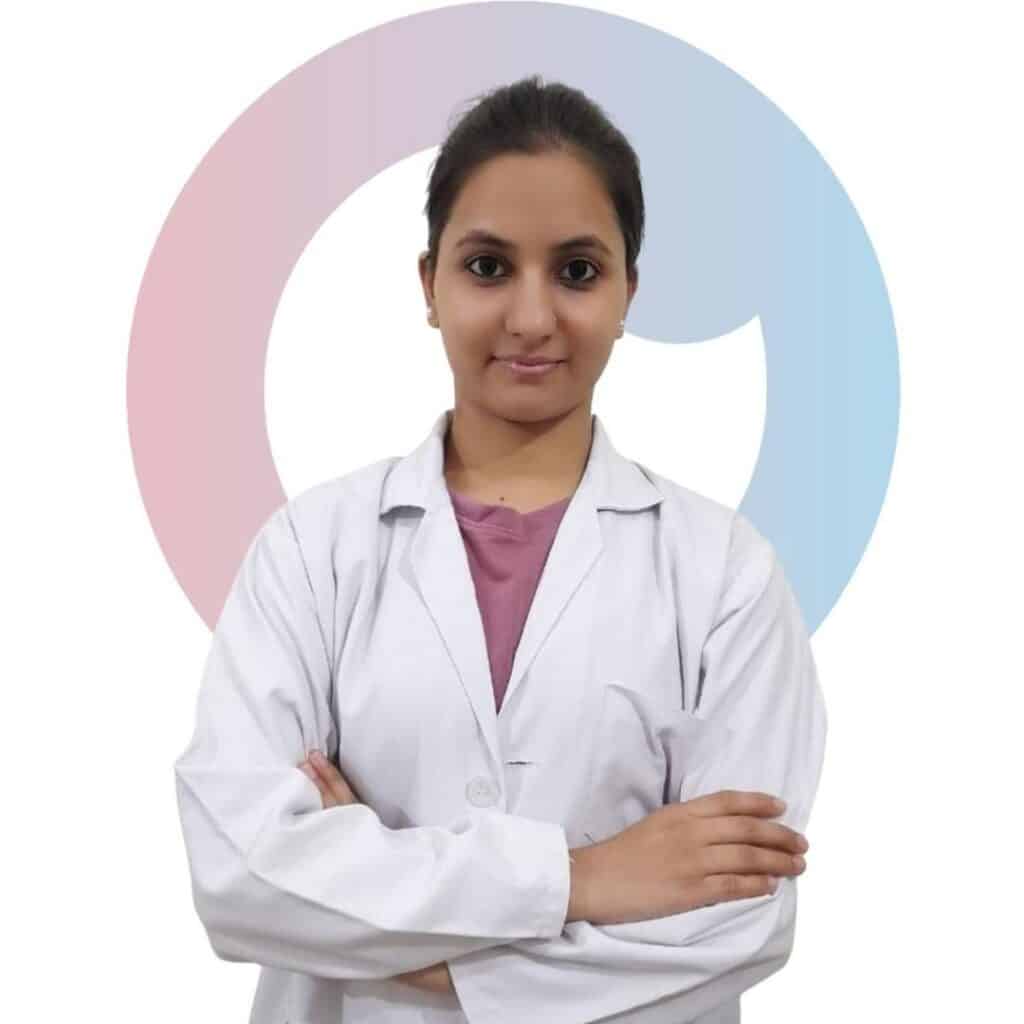
Dr. Nidhi Kumari
She has persuaded her bachelor’s from SGT University, Gurugram, she has done her internship at Dr. Ram Manohar Lohia Hospital, and persuade her Master in Physiotherapy from Chaudhary Charan Singh University, Meerut. She has previously worked with Orthocure clinic, Dr.Nasir physiotherapy rehabilitation, Quantum physiotherapy, and wellness center.
If you have more questions.
Dr. Nidhi
She has persuaded her bachelor’s from SGT University, Gurugram, she has done her internship at Dr. Ram Manohar Lohia Hospital, and persuade her Master in Physiotherapy from Chaudhary Charan Singh University, Meerut. She has previously worked with Orthocure clinic, Dr.Nasir physiotherapy rehabilitation, Quantum physiotherapy, and wellness center.
If you have more questions.
If you would like to know more about any of the health conditions, please fill up the form below and talk to Doctors on Resolve360 directly by asking a question.
We are your doctor’s first choice and trusted by 50,000+ patients.

We are your doctor’s first choice and trusted by 50,000+ patients.
We are your doctor’s first choice and trusted by 50,000+ patients.
We are your doctor’s first choice and trusted by 50,000+ patients.
