5 Best Physiotherapy Exercises for Neck Pain Relief
5 Best Physiotherapy Exercises for Neck Pain Relief
5 Best Physiotherapy Exercises for Neck Pain Relief
Reviewed & Verified by Dr Nidhi
August 16, 2026 5:11 am
[kkratings]
Table of Contents
Sagar, 29, worked as an SEO specialist and spent long hours in front of his laptop. Over time, he developed constant neck pain, making even simple tasks like turning his head or sitting at his desk uncomfortable. Painkillers provided only temporary relief, and the discomfort kept returning, affecting his focus, productivity, and overall daily life.
Seeking a lasting solution, Sagar tried Physiotherapy for Neck Pain with Resolve360. Our experts guided him through posture correction and simple, effective exercises such as neck stretches and resistance band rows. With online sessions, he could follow the program from home without missing work. In just 4 weeks, his pain reduced by 80%, his posture improved, and he regained full mobility—allowing him to work and live comfortably without constant discomfort.
Neck pain has become a common issue in today’s life. Sitting for hours in front of a laptop or looking down at your phone strains your neck muscles. Many people think the pain will go away on its own, but if you ignore it, it can get worse and affect your daily life.
The good news is, you don’t need strong painkillers or surgery to feel better. The safest and most effective solution is Physiotherapy for Neck Pain. It helps reduce pain, improves posture, and prevents future problems. At Resolve360, we even offer physiotherapy online, so you can get expert care at home without traveling. In this blog, you’ll learn what causes neck pain, when physiotherapy is right for you, and the 5 best physiotherapy exercises for quick relief.
What Are the Main Causes of Neck Pain?
Neck pain is very common today. Many people feel pain because of the way we sit, work, and use our phones. Small mistakes in daily life can turn into big problems if we ignore them. The first step to getting better is to know what is causing the pain.
Here are the main causes of neck pain:
Poor posture – Looking down at your phone or bending your neck while working on a laptop.
Work-from-home habits – Sitting long hours without a proper chair or desk.
Weak muscles – Neck and upper back muscles lose strength when you don’t exercise.
Stress and tension – Worry and stress can make neck muscles tight.
Injuries – Sudden jerks, falls, or accidents like whiplash can hurt the neck.
How Does Physiotherapy Help in Neck Pain?
Physiotherapy is the safest way to treat neck pain without painkillers or surgery. It doesn’t just stop pain—it fixes the root cause and makes your neck strong so the pain doesn’t come back.
Here’s how physiotherapy for neck pain helps:
Pain relief without medicines – Simple techniques reduce pain naturally.
Better posture – Physiotherapists guide you to sit and work the right way.
Muscle strength – Special exercises make your neck and shoulders stronger.
More flexibility – It improves your neck movement so you can turn easily.
Prevents future pain – Posture correction and exercises stop pain from coming back. You can go to a clinic or choose physiotherapy online to get expert care at home.
5 Best Physiotherapy Exercises for Neck Pain Relief
Neck pain can make simple tasks hard—like checking your phone or sitting at your desk. But the good news is, you don’t always need medicines to feel better. With the right physiotherapy exercises, you can reduce pain, improve posture, and make your neck stronger. Just go slow, and if you feel sharp pain, stop and check with your physiotherapist.
1. Foam Roller “T” and “Y” Position
This is one of the best physiotherapy exercises for neck pain to correct poor posture and release tension from the upper back. Sitting at a desk for long hours can make your shoulders round and chest tight, pulling your neck forward and causing pain. This exercise helps open the chest, improve posture, and relax neck muscles.
Step-by-Step Guide:
Lie on a foam roller placed along your spine so it supports your head and tailbone.
Bend your knees and keep your feet flat on the floor for balance.
Form a “T” position: Stretch your arms out sideways and hold for 20 seconds, breathing slowly.
Form a “Y” position: Move your arms upward into a “Y” shape and hold for another 20 seconds.
Repeat this cycle 3 to 4 times.
Muscles Targeted: Chest muscles, upper back muscles, and neck stabilizers.
Benefits:
Improves posture by opening tight chest muscles.
Reduces tension in the neck and upper back.
Helps prevent slouching during work.
Promotes better breathing by expanding the chest.
Pro Tip: Do this 3–4 times a week for best results.
Common Mistake to Avoid: Don’t lift your head off the roller; keep it supported to prevent strain.
Neck and Shoulder Rolls are one of the easiest and most effective ways to relax your upper body. Sitting for long hours, working on a computer, or using your phone can make your neck and shoulders tight and sore. This exercise gently loosens those muscles, improves blood flow, and reduces stress, making you feel lighter and more comfortable.
Step-by-Step Guide
Sit or stand with your back straight and shoulders relaxed.
Roll your shoulders forward in a circular motion 10 times slowly.
Roll your shoulders backward in a circular motion 10 times.
Tilt your head gently to the right side, then to the left, holding each for 5 seconds.
Repeat the sequence 2–3 times.
Muscles Targeted: Neck muscles, trapezius, and shoulder muscles.
Benefits:
Reduces stiffness in the neck and shoulders.
Improves blood circulation.
Helps relieve tension from sitting or working for long hours.
Prevents headaches caused by tight neck muscles.
Pro Tip: Do this exercise during short breaks at work or after using your phone for a long time.
Common Mistake to Avoid: Avoid rolling your head in a full circle; this can strain the neck joints.
3. Seated Neck Side Stretch
This exercise is perfect for relieving tightness on the sides of your neck, which often happens due to looking at screens or sleeping in the wrong position. It gently stretches the muscles and improves flexibility.
How to do it:
Sit on a chair with your spine straight and shoulders relaxed.
Slowly tilt your head toward your right shoulder (don’t lift the shoulder), and hold for 20 seconds while breathing deeply.
Return to the center and repeat on the left side.
Do this stretch 3 times on each side.
Benefits:
Reduces stiffness in the neck muscles
Improves flexibility and range of motion
Helps prevent tension headaches caused by tight neck muscles
Pro Tip: Do this stretch during short breaks at work or after long hours on your phone or computer.
Common Mistake to Avoid: Don’t lift your shoulder toward your ear while tilting your head; keep the shoulder relaxed to avoid strain.
4. Prone Rows / Resistance Band Rows
This exercise strengthens the muscles of your upper back and neck, which support good posture and reduce neck pain caused by long hours of sitting or working at a desk.
How to do it (Prone Rows):
Lie face down on a mat with your arms by your sides.
Slowly pull your elbows back, squeezing your shoulder blades together.
Hold for 3 seconds, then relax.
Repeat 10–15 times.
Alternative (Resistance Band Rows):
Tie a resistance band to a stable doorknob or object.
Sit or stand, hold the ends, and pull the band toward your body, squeezing the shoulder blades.
Hold for 2–3 seconds, then slowly release. Repeat 10–15 times.
Muscles Targeted: Upper back, trapezius, rhomboids, and neck stabilizers.
Benefits:
Strengthens upper back and neck muscles for better posture
Reduces strain on the cervical spine
Improves overall shoulder stability and alignment
Pro Tip: Focus on squeezing your shoulder blades together, not just moving your arms. Keep movements slow and controlled.
Common Mistake to Avoid: Avoid shrugging your shoulders or arching your lower back; maintain a neutral spine to prevent strain.
5. Aquatic Exercises for Neck Pain
Water exercises are gentle and effective for relieving neck pain because the water supports your body and reduces pressure on your spine. This makes them ideal for easing stiffness, tension, or mild neck injuries.
How to do it:
Stand in shoulder-deep water with feet shoulder-width apart.
Slowly move your head side to side, keeping your movements smooth and controlled.
Then move your head up and down, again slowly and carefully.
Repeat each movement 10–15 times, resting if needed.
Muscles Targeted: Neck muscles, upper back muscles, and shoulder stabilizers.
Benefits:
Reduces pressure on the neck and spine
Gently strengthens neck and upper back muscles
Improves flexibility and range of motion
Safe for people with mild neck injuries or chronic stiffness
Pro Tip: Do these exercises in a warm pool to relax muscles and enhance comfort.
Common Mistake to Avoid: Avoid moving too quickly or forcing your neck; water supports your body, so slow, gentle movements are enough.
Additional Home Tips for Neck Pain Relief
Neck pain isn’t just about exercises—it’s also about how you live your daily life. These simple home tips can make a big difference when combined with physiotherapy for neck pain:
Use a warm compress: Placing a warm towel or heating pad on your neck relaxes tight muscles and improves blood flow, easing stiffness.
Set up your workstation correctly: Keep your screen at eye level, chair at a comfortable height, and sit with your back straight to avoid slouching.
Hold your phone at eye level: This prevents bending your neck downward for long periods, which is a common cause of neck strain.
Take short movement breaks every 30 minutes: Stand, stretch, or roll your shoulders to keep neck muscles loose and prevent tension.
Maintain good posture while resting: Even when watching TV or reading, try to keep your head and neck aligned with your spine.
Pro Tip: Combining these home adjustments with regular physiotherapy exercises can give faster, long-lasting relief and help prevent future neck pain.
How Physiotherapy Helped Neha Recover from Neck Pain
Patient: Neha, 32, IT Professional Problem: Neha had been suffering from chronic neck pain for 8 months due to long hours on her laptop. Symptoms: Stiff neck, tension headaches, and pain spreading to her shoulders.
Treatment at Resolve360:
Posture correction and ergonomic guidance for her workstation
Foam Roller “T” & “Y” exercises for chest and upper back release
Guided stretches and strengthening routines for neck and shoulder muscles
Lesson Learned: Consistent physiotherapy combined with small lifestyle changes—like proper posture, regular breaks, and targeted exercises—can prevent chronic neck problems and provide long-lasting relief.
When Should You Avoid Physiotherapy for Neck Pain?
Physiotherapy is highly effective for most people, but there are certain situations where it can be unsafe to perform neck exercises. Attempting exercises in these conditions may worsen your pain or cause injury. Always consult a doctor first if you experience:
Severe injury or suspected fracture: If you have recently had an accident or fall, your neck may be unstable. Exercises can aggravate the injury.
High fever or infection: Illness can weaken your body, making exercises risky.
Sudden numbness or weakness in limbs: This could indicate nerve or spinal issues that require immediate medical attention.
Dizziness, balance problems, or severe vertigo: Neck exercises may worsen these symptoms.
Key Advice: Do not start physiotherapy on your own in these situations. A proper medical evaluation is essential to ensure safety before starting any exercise program
Preventing Neck Pain: Best Daily Habits
Once you’ve recovered or even while performing physiotherapy, preventing neck pain is equally important. Simple daily habits can help maintain healthy neck muscles, improve posture, and prevent chronic issues:
Adjust your workstation: Keep your laptop or monitor at eye level, and use a supportive chair to avoid slouching.
Use a supportive pillow: Ensure your pillow keeps your neck aligned with your spine while sleeping.
Take regular breaks from screen work: Stand up, walk around, or do light stretches every 30–45 minutes to relieve tension.
Maintain good posture throughout the day: Keep shoulders relaxed, back straight, and avoid leaning forward for prolonged periods.
Pro Tip: Combining these daily habits with physiotherapy for neck pain, either in-clinic or physiotherapy online, ensures faster recovery, reduces the risk of future pain, and keeps your neck muscles strong and flexible
Why Choose Resolve360 for Neck Pain Physiotherapy?
When it comes to neck pain, getting expert guidance is key. Resolve360 provides professional physiotherapy designed to give long-term relief and improve your quality of life. Here’s why patients trust us:
Certified Physiotherapists with Experience: Our team of trained professionals specializes in treating neck pain, posture issues, and related conditions.
Convenient Online Physiotherapy Sessions: Access expert care from the comfort of your home through guided physiotherapy online. No need to travel or wait for appointments.
Personalized Treatment Plans: Every patient receives a customized program based on their specific symptoms, lifestyle, and recovery goals.
Focus on Long-Term Recovery: We strengthen muscles, improve posture, and provide strategies to prevent future neck pain—our goal is lasting relief, not just temporary fixes.
Evidence-Based Approach: All treatments follow proven physiotherapy methods to ensure safe, effective results.
Pro Tip: Combining online physiotherapy from Resolve360 with simple daily habits, like posture correction and short breaks from screens, helps achieve faster, sustainable relief from neck pain.
Start Your Neck Pain Recovery Today
Neck pain doesn’t have to control your life. With Physiotherapy for Neck Pain, you can relieve discomfort naturally, improve posture, and prevent future issues. Resolve360 offers expert physiotherapy online, providing personalized care for neck pain, back pain, joint pain, and disc bulges.
By combining professional guidance with daily habits and targeted exercises, you can strengthen your muscles, reduce pain, and regain mobility—without relying on medication. Start your journey toward a healthier, pain-free life today with Resolve360
Yes, physiotherapy is one of the most effective treatments for neck pain. It reduces stiffness, improves posture, strengthens weak neck muscles, and prevents cervical pain from coming back—without relying on painkillers
Muscular neck pain feels like soreness, tightness, or stiffness. Nerve-related neck pain may cause sharp shooting pain, tingling, numbness, or weakness in arms and shoulders. A physiotherapy evaluation with Resolve360 helps identify the exact cause and provides the right treatment plan.
Red flags include sudden severe pain after an accident, fever with neck stiffness, numbness in hands, weakness in arms, or balance issues. In such cases, avoid physiotherapy at home and consult a doctor first.
Gentle neck stretches, chin tucks, and resistance band rows are the best physiotherapy exercises for cervical spondylosis and neck stiffness. These improve posture, release tight muscles, and strengthen the spine-supporting muscles.
Yes, simple exercises like shoulder rolls, side neck stretches, and foam roller posture correction can be done safely at home. Online physiotherapy ensures correct guidance and helps avoid mistakes.
A medium-firm, ergonomic cervical pillow or memory foam pillow that keeps your neck aligned with the spine is best. Using the right pillow with physiotherapy exercises ensures faster recovery from cervical pain
Most patients notice improvement within 4–6 weeks of consistent physiotherapy for neck pain. Chronic cervical pain may need longer treatment along with posture correction and strengthening exercises.
You can release neck muscles naturally with physiotherapy stretches, warm compresses, foam roller “T” & “Y” exercises, and posture correction. These improve blood circulation and ease tension.
Yes, online physiotherapy sessions with Resolve360 provide guided exercises, posture correction, and real-time feedback from experts—giving the same benefits as clinic visits, while saving time and travel.
To prevent cervical pain, keep your screen at eye level, take breaks every 30 minutes, use a supportive pillow, practice posture correction, and do regular neck stretches. Physiotherapy + lifestyle changes ensure long-term relief.
Dr. Nidhi Kumari
She has persuaded her bachelor’s from SGT University, Gurugram, she has done her internship at Dr. Ram Manohar Lohia Hospital, and persuade her Master in Physiotherapy from Chaudhary Charan Singh University, Meerut. She has previously worked with Orthocure clinic, Dr.Nasir physiotherapy rehabilitation, Quantum physiotherapy, and wellness center.
She has persuaded her bachelor’s from SGT University, Gurugram, she has done her internship at Dr. Ram Manohar Lohia Hospital, and persuade her Master in Physiotherapy from Chaudhary Charan Singh University, Meerut. She has previously worked with Orthocure clinic, Dr.Nasir physiotherapy rehabilitation, Quantum physiotherapy, and wellness center.
I have been taking sessions from March without a break. It has been a boon for my physical fitness. My issues with my fitness especially knee ligaments have been effectively taken care of and I am able to continue with active tennis daily thanks to resolve360 and Dr. David
Mr Keyur Dalwadi
Speech Therapy for his Kid
We contacted resolve360 for our child speech issue and I must say Resolve 360 team and Apoorva doing a wonderful job.
Our speech therapist Jaslia from Resolve360 is having a excellent knowledge.... Read More
Mr Ram Kumar
Physical Fitness
From being a couch potato with poor cardio respiratory system to reaching pre-athlete levels of fitness in a span of 3 months, my journey with Resolve360 and Dr.David (Physiotherapist) has been anything but magical!..... Read More
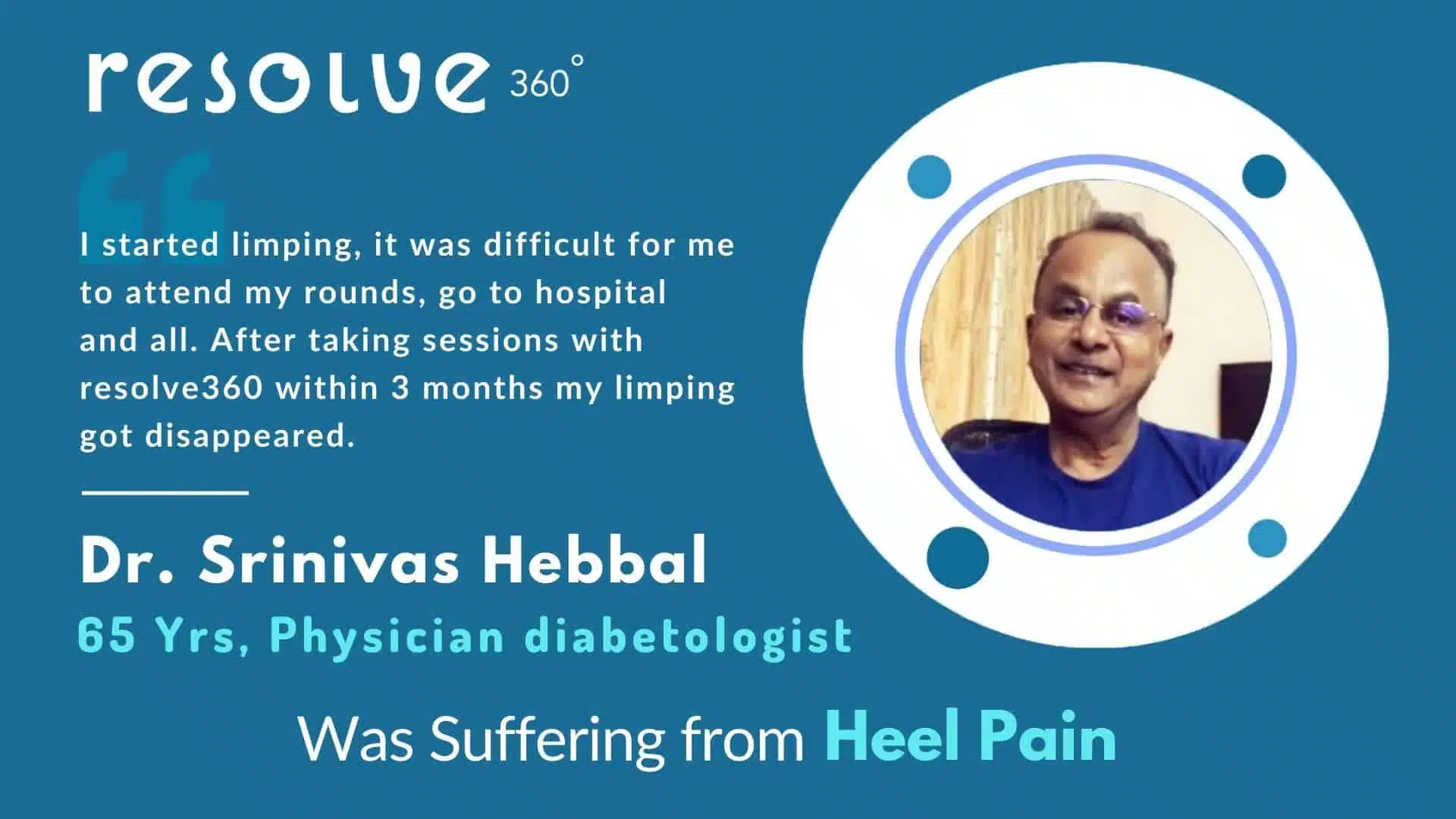
Dr Shrinivas H
Rehab for Heel Pain
I had online Physiotherapy sessions by Prerana for my heel pain. ( Tendo Achilis Sprain).
Though virtual, it was more interactive.
She was very observant throughout the sessions, correcting me while doing the exercises..... Read More
Mr Narayan Vyas
COVID19 Rehab
One of the best app available for therapy sessions online. I was covid positive, and one more my friend recommended this app, trust me, it was the best decision I have ever taken..... Read More
Ms Shilpi B
Rehab for Ligament Injury
A friend introduced me to Resolve 360 so that I could treat a ligament injury that was hindering my day to day activities. It was a bad phase! This platform is not only a.... Read More
Ms Uma Narayanan
Rehab for Back Pain
Let the year 2021 bring laughter, joy and happiness and good health. It already has, in mine and my husband Narayans life. Yes we are now freely moving around doing..... Read More
Mr Nikhil Shrivastava
COVID19 Rehab
My father’s case was worse case of covid he had severe lung damage and was in hospital for almost 40 days, My mentor here provided really great guidance and help; sessions helped so much in recovery...Read More
Ms Srishti Gupta
Rehab for Back Pain
Hello everyone
I have been regularly taking sessions from Resolve360 (from Dr Apoorva) since January 2020. I have been suffering from upper and lower back pain from last 10 years....Read More
Ms Christy J
Post Natal Care
By the advice of my gynaecologist, I found this place. I thank doctor Dr Aporva for supported me and encouraged me well even before my sessions begin. Doctor Prerna who dealt me...Read More
Ms Garima Gupta
Rehab for Neck & Back Pain
Best therapy sessions that too at home and timings are very flexible. I had a issue in my neck and lower back since almost 4 to 5 years, taken so many treatments...Read More
Ms Shubhra Jain
Prenatal Care
I took prenatal care program from Resolve 360. Dr. Preyrna was assigned to me and she has done commendable job. I did prenatal exercises under her supervision, she designed...Read More
Ms Shruti Gupta
Rehab for Scapula Dyskinesia
Resolve360 is great platform for online physiotherapy.
I was suffering from scapula dyskinesia and had lot of pain in right shoulder movement.
I was introduced...Read More
R HARISHANKAR
COVID19 Rehab
The therapy sessions were very helpful in regaining heart and lung fitness after recovering from covid. The trainers were friendly, knowledgeable and they provided a customised program depending on my fitness level and health condition.
Mr Rohit Musaddi
Rehab for Knee Pain
I have been taking sessions from March without a break. It has been a boon for my physical fitness. My issues with my fitness especially knee ligaments have been effectively taken care of and I am able to continue with active tennis daily thanks to resolve360 and Dr. David
Mr Keyur Dalwadi
Speech Therapy for his Kid
We contacted resolve360 for our child speech issue and I must say Resolve 360 team and Apoorva doing a wonderful job.
Our speech therapist Jaslia from Resolve360 is having a excellent knowledge.... Read More
Mr Ram Kumar
Physical Fitness
From being a couch potato with poor cardio respiratory system to reaching pre-athlete levels of fitness in a span of 3 months, my journey with Resolve360 and Dr.David (Physiotherapist) has been anything but magical!..... Read More
Dr Shrinivas H
Rehab for Heel Pain
I had online Physiotherapy sessions by Prerana for my heel pain. ( Tendo Achilis Sprain).
Though virtual, it was more interactive.
She was very observant throughout the sessions, correcting me while doing the exercises..... Read More
Mr Narayan Vyas
COVID19 Rehab
One of the best app available for therapy sessions online. I was covid positive, and one more my friend recommended this app, trust me, it was the best decision I have ever taken..... Read More
Ms Shilpi B
Rehab for Ligament Injury
A friend introduced me to Resolve 360 so that I could treat a ligament injury that was hindering my day to day activities. It was a bad phase! This platform is not only a.... Read More
Ms Uma Narayanan
Rehab for Back Pain
Let the year 2021 bring laughter, joy and happiness and good health. It already has, in mine and my husband Narayans life. Yes we are now freely moving around doing..... Read More
Mr Nikhil Shrivastava
COVID19 Rehab
My father’s case was worse case of covid he had severe lung damage and was in hospital for almost 40 days, My mentor here provided really great guidance and help; sessions helped so much in recovery...Read More
Ms Srishti Gupta
Rehab for Back Pain
Hello everyone
I have been regularly taking sessions from Resolve360 (from Dr Apoorva) since January 2020. I have been suffering from upper and lower back pain from last 10 years....Read More
Ms Christy J
Post Natal Care
By the advice of my gynaecologist, I found this place. I thank doctor Dr Aporva for supported me and encouraged me well even before my sessions begin. Doctor Prerna who dealt me...Read More
Ms Garima Gupta
Rehab for Neck & Back Pain
Best therapy sessions that too at home and timings are very flexible. I had a issue in my neck and lower back since almost 4 to 5 years, taken so many treatments...Read More
Ms Shubhra Jain
Prenatal Care
I took prenatal care program from Resolve 360. Dr. Preyrna was assigned to me and she has done commendable job. I did prenatal exercises under her supervision, she designed...Read More
Ms Shruti Gupta
Rehab for Scapula Dyskinesia
Resolve360 is great platform for online physiotherapy.
I was suffering from scapula dyskinesia and had lot of pain in right shoulder movement.
I was introduced...Read More
R HARISHANKAR
COVID19 Rehab
The therapy sessions were very helpful in regaining heart and lung fitness after recovering from covid. The trainers were friendly, knowledgeable and they provided a customised program depending on my fitness level and health condition.
If you would like to know more about any of the health conditions, please fill up the form below and talk to Doctors on Resolve360 directly by asking a question.
We are your doctor’s first choice and trusted by 50,000+ patients.
get a call in 15 minutes
We are your doctor’s first choice and trusted by 50,000+ patients.
Get a Call in 15 Minutes
We are your doctor’s first choice and trusted by 50,000+ patients.
Get a Call in 15 Minutes
We are your doctor’s first choice and trusted by 50,000+ patients.