





Many people delay ankylosing spondylitis physiotherapy because they mistake it for regular back pain. But starting treatment early can make a life-changing difference. Gentle exercises and guided movement help reduce stiffness, improve posture, and keep the spine flexible for years.
Example from our Online Program (Patient: Ravi, 32, Pune) : Ravi was experiencing constant lower back stiffness every morning due to early Ankylosing Spondylitis. He began an 8-week online ankylosing spondylitis physiotherapy program with Resolve360. Through daily guided stretches, posture correction, and breathing exercises, he noticed his pain reduce by nearly 60%. His flexibility improved, and he could return to morning walks without discomfort.
This example shows how consistent, expert-led ankylosing spondylitis physiotherapy can help restore movement and confidence — all from the comfort of your home through Resolve360’s online physiotherapy platform.
Do you wake up every morning with a stiff back or pain that makes it hard to bend or move? These can be early signs of Ankylosing Spondylitis (AS) — a long-term spine condition that affects your lower back and hips. If not treated early, stiffness can increase and make your spine less flexible over time.
The good news is that physiotherapy for Ankylosing Spondylitis can help you stay active and reduce pain naturally. At Resolve360, our expert physiotherapists provide online physiotherapy sessions based on the latest research. These sessions include gentle stretching, breathing exercises, and posture correction that you can do safely from home — without surgery or heavy medicines.
Ankylosing Spondylitis (AS) is a long-term type of arthritis that mainly affects the spine. It causes swelling in the small bones of the back (called vertebrae), which can slowly fuse together over time. This makes the spine stiff and can cause a bent or forward-curved posture.
AS usually begins in young adults between 20 and 40 years of age and is more common in men. Apart from the spine, it can also cause pain and stiffness in the hips, shoulders, and large joints, especially after rest or in the morning.
With the right ankylosing spondylitis physiotherapy, gentle movements and posture training can help prevent stiffness, protect spine flexibility, and maintain better mobility even in long-term cases.
Key Facts :
AS is now part of a broader group called Axial Spondyloarthritis (axSpA) — this means it shares features with early-stage spinal inflammation.
If you notice these signs, don’t ignore them. Early ankylosing spondylitis physiotherapy treatment can help reduce pain, improve movement, and stop the problem from getting worse.
Physiotherapy is one of the best ways to manage Ankylosing Spondylitis. It helps your body stay strong, flexible, and active at every stage of the condition.
Here’s how ankylosing spondylitis physiotherapy helps:
With the right physiotherapy plan, you can move better, feel less pain, and live an active life — even with Ankylosing Spondylitis.
Also Read: Physiotherapy For Joint Pain ; Physiotherapy For Disc Burge
Many people with ankylosing spondylitis find it hard to stay active because of pain and stiffness. But just 10 minutes of gentle physiotherapy for ankylosing spondylitis each day can help you stay flexible and ease discomfort. This short routine focuses on posture, mobility, and breathing — three key areas in ankylosing spondylitis physiotherapy.
Start your day by loosening your spine and joints:
These gentle movements are part of standard ankylosing spondylitis physiotherapy treatment, which focuses on maintaining posture and spinal flexibility.
Sitting for long hours can worsen stiffness. Try these simple movements at work or home:
These short breaks are common in most ankylosing spondylitis physical therapy programs — they keep your spine active even during a busy day.
Before bed, try slow stretches to relax your body:
Doing these physiotherapy exercises for ankylosing spondylitis regularly helps manage pain, improve balance, and keep your body strong. The goal is not intensity but consistency — even 10 minutes daily can help you move better and feel more in control.
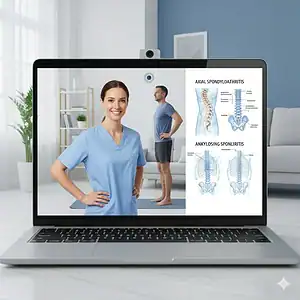
At Resolve360, all our physiotherapy programs for Ankylosing Spondylitis are delivered 100% online through secure video consultations. You can connect with certified physiotherapists anywhere in India — right from your home — without traveling or waiting in clinics.
Your online treatment plan is divided into three key stages:
During your first online session, our physiotherapist will:
You’ll also receive a digital exercise plan and posture correction guide designed just for you.
Your physiotherapist will demonstrate safe, gentle movements live during your sessions and watch you perform them to ensure correct form. These may include:
Every session is tracked online — your therapist monitors your progress and adjusts your plan weekly.
Once pain is controlled, the focus shifts to building long-term strength and spine stability through:
All exercises are video-guided, safe, and easy to follow at home with ongoing online supervision.
Resolve360 makes physiotherapy for Ankylosing Spondylitis accessible, affordable, and consistent — right from your living room.
Also Read: Physiotherapy For Back Pain ; Physiotherapy For Knee Pain
At Resolve360, our online physiotherapists design safe and effective exercise routines that help people with Ankylosing Spondylitis stay flexible, manage pain, and maintain posture.
These exercises are based on the latest clinical research (Rheumatology International 2024–2025) and are recommended for all stages of the condition.
Neck stiffness is one of the earliest signs of Ankylosing Spondylitis. Gentle neck stretches help maintain flexibility in the cervical spine, reduce pain, and prevent long-term restriction of head movement.
Chest stiffness is a major symptom of Ankylosing Spondylitis because inflammation limits rib movement. Controlled breathing exercises help maintain chest expansion and improve lung function.
AS often affects the upper spine and shoulders, leading to tightness and poor posture. Shoulder rolls are simple but effective for relaxing the muscles and maintaining mobility.
Spinal stiffness and forward bending posture are common in Ankylosing Spondylitis. This exercise promotes extension (backward bending) of the spine, helping maintain upright posture.
Lower back and hip stiffness are common in AS. This stretch helps relax the lower spine and improves hip flexibility.
A strong core and stable pelvis are vital for spinal health. Pelvic tilts strengthen the abdominal and back muscles, which support spinal alignment.
Tight hip flexors can pull the pelvis forward, worsening posture and back discomfort. This stretch keeps the hips flexible and aligned.
Tight hamstrings restrict back and hip movement. This stretch helps improve flexibility and reduces back strain during daily tasks.
Water-based exercises are ideal for AS because they reduce joint stress while allowing full-body movement.
Walking is a simple yet powerful way to maintain movement in the spine and joints. It helps prevent stiffness and supports posture naturally.

Patient Name: Ravi Kumar, 32 years, Pune, India
Condition: Early-stage Ankylosing Spondylitis with chronic morning stiffness, lower back pain, and reduced flexibility.
Ravi approached Resolve360 after experiencing persistent back stiffness that interfered with his daily routine. Following a detailed online assessment, our physiotherapy team evaluated his spine mobility, posture, and muscle strength through secure video consultations.
A personalized eight-week online physiotherapy program was then designed to address his specific needs and lifestyle. The treatment plan included:
After eight weeks of consistent physiotherapy with Resolve360, Ravi reported:
Ravi’s recovery demonstrates how structured online physiotherapy can deliver outcomes comparable to in-person sessions when tailored by qualified professionals. Regular therapist supervision, posture tracking, and progressive exercise programming played a key role in his improvement.
This case highlights that Ankylosing Spondylitis can be effectively managed through virtual physiotherapy—especially when patients receive consistent guidance, education, and motivation.
Resolve360 continues to support patients across India in improving mobility, posture, and quality of life from the comfort of their homes.
At Resolve360, we ensure that every Ankylosing Spondylitis physiotherapy plan aligns with the most recent clinical research and global physiotherapy guidelines.
Here’s what the latest medical evidence (2024–2025) says about Ankylosing Spondylitis management:
Studies published in Rheumatology International (2024) confirm that starting physiotherapy early helps slow down spinal fusion and stiffness. Regular guided movement reduces inflammation and maintains spinal flexibility.
New research highlights that aquatic therapy, yoga, and breathing exercises improve both physical mobility and emotional well-being in Ankylosing Spondylitis patients. These low-impact exercises also support posture correction and lung expansion.
Recent data shows that tele-rehabilitation (online physiotherapy) is as effective as in-person treatment when sessions are guided by trained professionals.
Platforms like Resolve360 use video sessions and progress tracking to monitor exercises and ensure adherence to daily routines.
A 2025 clinical trial found that adding soft tissue mobilization before traditional stretching improved pain control and spinal mobility. This technique is now being integrated into many advanced physiotherapy programs.
Studies on Yoga, Pilates, and Tai Chi report moderate evidence that these exercises help reduce fatigue, improve posture, and enhance overall quality of life for people with Ankylosing Spondylitis.
A meta-analysis in Spondyloarthritis Research (2025) found that combining strength, flexibility, and aerobic exercises provides the most effective outcome for spine function and pain reduction.
The British Society for Rheumatology (2025) and similar organizations recommend consistent, guided physiotherapy and posture correction as essential parts of long-term management—alongside medications prescribed by a rheumatologist.
In India, patients in smaller cities are increasingly turning to online physiotherapy due to limited rheumatology centers. Resolve360’s digital care model bridges this gap, offering professional physiotherapy anywhere, anytime.
Ongoing trials in 2025 show that wearable sensors and app-based exercise tracking help physiotherapists monitor posture and spinal mobility remotely—making digital physiotherapy smarter and more effective.
Many patients get confused between Axial Spondyloarthritis (axSpA) and Ankylosing Spondylitis (AS) — but they are part of the same disease spectrum. The main difference lies in how advanced the condition is and what shows up on imaging tests.
| Feature | Axial Spondyloarthritis (axSpA) | Ankylosing Spondylitis (AS) |
|---|---|---|
| Definition | Early or mild form of inflammation in the spine and sacroiliac joints. | Advanced stage of axSpA where the spinal bones start to fuse together. |
| X-ray / MRI Findings | In early stages, X-rays may look normal — inflammation is usually seen only on MRI. | Structural changes and bone fusion are visible clearly on X-rays. |
| Symptoms | Back pain, morning stiffness, and fatigue that improve with movement. | More severe stiffness, reduced spine mobility, and visible postural changes. |
| Treatment Goals | Control inflammation, reduce stiffness, and prevent fusion. | Maintain flexibility, manage chronic pain, and slow down disease progression. |
| Role of Physiotherapy | Focuses on improving posture, spine flexibility, and lung expansion through guided exercise. | Helps prevent further stiffness and spinal fusion, and supports daily activity management. |
At Resolve360, every session is conducted by qualified physiotherapists who specialize in treating Ankylosing Spondylitis and other spine or arthritis-related problems. Our team understands how inflammation and stiffness affect your daily life — and we guide you step-by-step toward recovery.
All our programs are one-on-one virtual sessions, customized to your comfort and schedule. Your physiotherapist observes your movements live, corrects your posture in real-time, and designs a home-based routine that fits your lifestyle.
No clinic visits. No waiting time. Resolve360 brings expert physiotherapy for Ankylosing Spondylitis straight to your phone or laptop — so you can heal from the comfort of your home, whether you’re in Delhi, Pune, Chennai, or a remote town.
We don’t just treat the pain — we treat the person. Each plan focuses on:
Thousands of people have improved their movement, reduced pain, and regained confidence through Resolve360’s online physiotherapy sessions. Our results come from consistency, compassion, and expert care — no medicine, no surgery.
“At Resolve360, physiotherapy isn’t just about exercise — it’s about helping you move freely and live better every day.”
If you’re living with stiffness, back pain, or early symptoms of Ankylosing Spondylitis, don’t wait.
Early physiotherapy can make all the difference.
👉 Book your online physiotherapy consultation with Resolve360 today.
Our expert team will assess your posture, create a personalized home exercise plan, and guide you step-by-step toward pain-free movement.
Visit resolve360.app to get started.
The best physiotherapy exercises for Ankylosing Spondylitis are spine stretching, core strengthening, deep breathing, and posture correction movements. These exercises help reduce stiffness, improve flexibility, and prevent spinal fusion. Gentle yoga and daily back mobility exercises are often recommended as part of ankylosing spondylitis physiotherapy treatment.
Yes, ankylosing spondylitis physical therapy plays a key role in managing pain and stiffness. Regular physiotherapy helps restore spinal movement, correct posture, and reduce inflammation. Through guided stretching, strengthening, and breathing routines, physiotherapy supports long-term mobility and reduces the need for medications.
Absolutely. Physiotherapy for Ankylosing Spondylitis helps relieve back pain, maintain posture, and improve daily activity levels. It includes tailored spine exercises, joint mobility drills, and breathing techniques. Consistent ankylosing spondylitis physiotherapy sessions can slow disease progression and keep the spine flexible.
The first line of therapy for Ankylosing Spondylitis is Nonsteroidal Anti-Inflammatory Drugs (NSAIDs), which reduce inflammation and pain. Along with medication, regular ankylosing spondylitis physiotherapy treatment and spinal mobility exercises help preserve posture, flexibility, and long-term joint health.
Ankylosing Spondylitis (AS) is a specific type of Axial Spondyloarthritis (axSpA). Both cause inflammation in the spine and sacroiliac joints, leading to stiffness and pain. Early ankylosing spondylitis physical therapy helps manage symptoms in both stages by improving mobility and reducing spinal rigidity.
Yes, online physiotherapy for Ankylosing Spondylitis is highly effective. Through tele-rehabilitation sessions, patients can perform guided posture correction, stretching, and core stability exercises safely at home. This modern approach to ankylosing spondylitis physiotherapy treatment ensures regular supervision and better flexibility outcomes.
Most people notice reduced stiffness and improved posture within 4 to 8 weeks of consistent ankylosing spondylitis physiotherapy. Progress depends on exercise regularity, spinal condition, and overall health. Continued physiotherapy exercises for Ankylosing Spondylitis help maintain mobility and prevent spinal fusion.
Yes — daily gentle exercise is safe and beneficial for Ankylosing Spondylitis. Low-impact activities like walking, swimming, stretching, and breathing drills keep the spine flexible and reduce stiffness. Regular ankylosing spondylitis physical therapy exercises support mobility and help control chronic pain safely.
Dr. Nidhi Kumari
She has persuaded her bachelor’s from SGT University, Gurugram, she has done her internship at Dr. Ram Manohar Lohia Hospital, and persuade her Master in Physiotherapy from Chaudhary Charan Singh University, Meerut. She has previously worked with Orthocure clinic, Dr.Nasir physiotherapy rehabilitation, Quantum physiotherapy, and wellness center.
If you have more questions.
Dr. Nidhi
She has persuaded her bachelor’s from SGT University, Gurugram, she has done her internship at Dr. Ram Manohar Lohia Hospital, and persuade her Master in Physiotherapy from Chaudhary Charan Singh University, Meerut. She has previously worked with Orthocure clinic, Dr.Nasir physiotherapy rehabilitation, Quantum physiotherapy, and wellness center.
If you have more questions.
Also Read: Back Pain: Causes and Treatment
If you would like to know more about any of the health conditions, please fill up the form below and talk to Doctors on Resolve360 directly by asking a question.
We are your doctor’s first choice and trusted by 50,000+ patients.