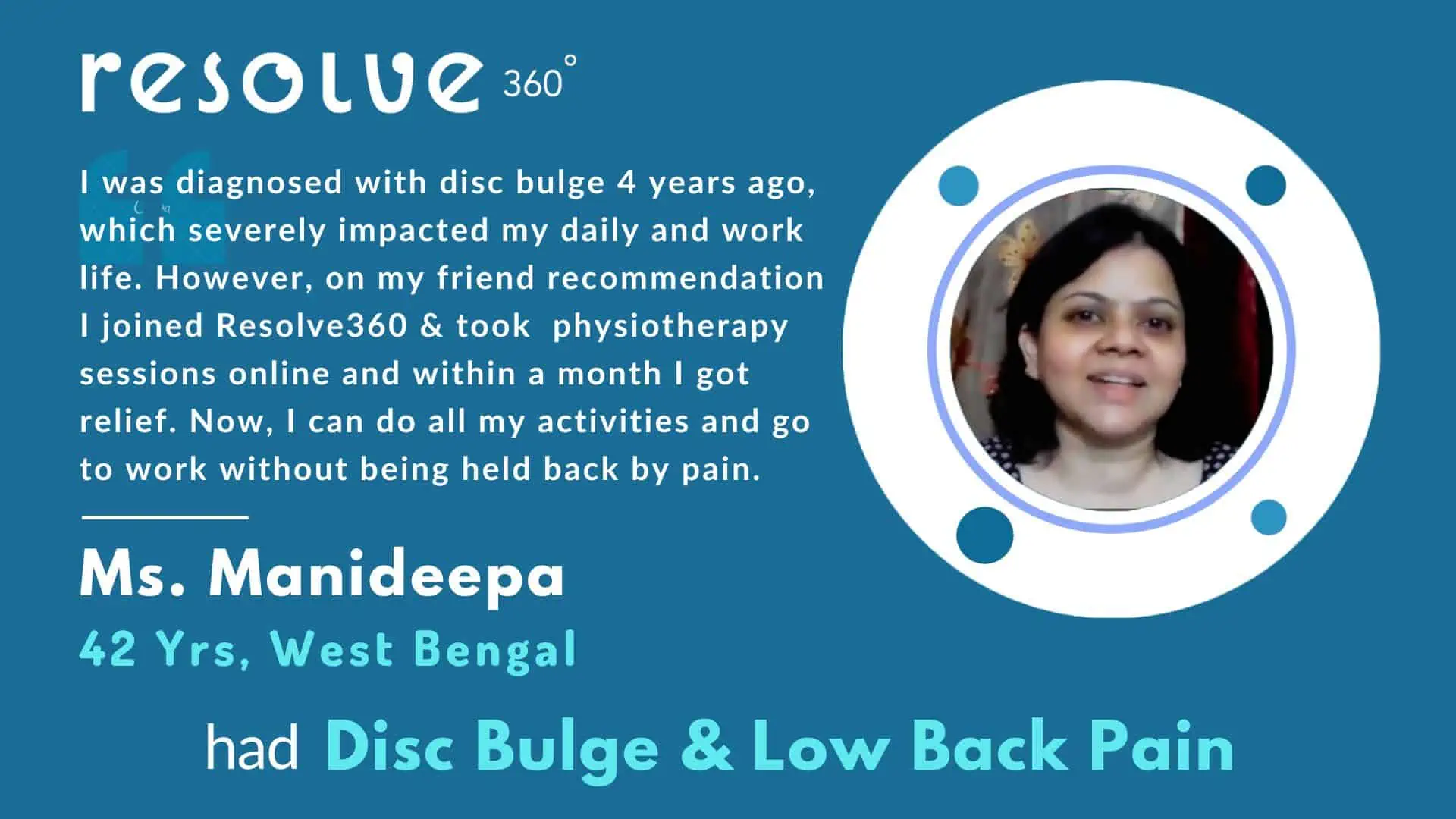
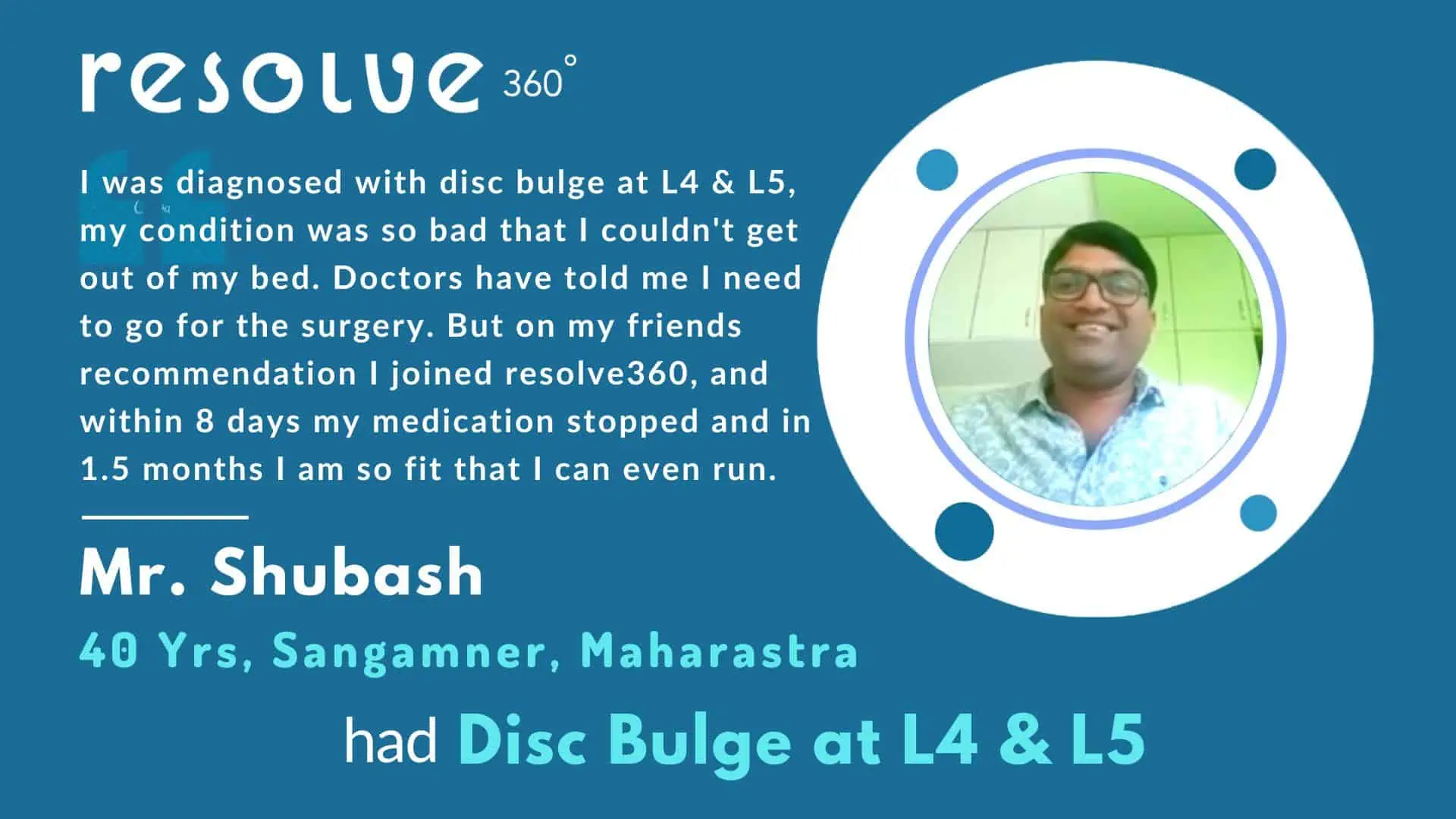
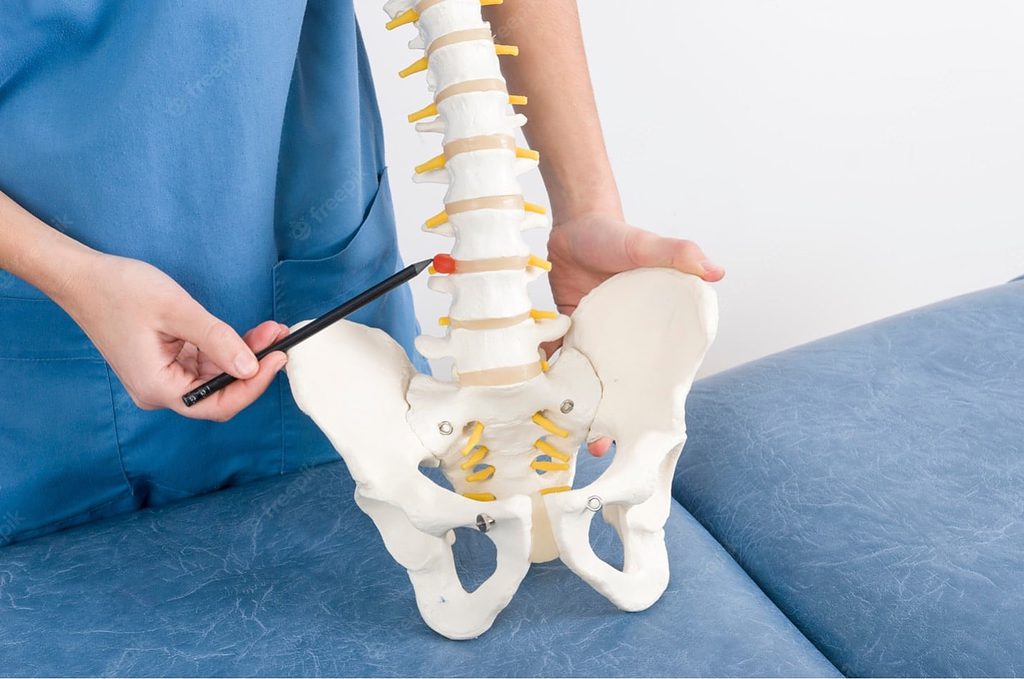
Our backbone is made up of units called vertebrae. These vertebrae are connected with the help of discs. When the gel in the disc center starts to wear off and reduce it leads to the problem of disc bulging. Less gel causes the discs to get compressed and they bulge out. Reduction in the amount of gel is a common phenomenon while aging. A disc bulge can also be caused due to spinal injury caused by an accident like a car or motorcycle accident.
Treatments for Disc Bulge
How can a patient know that their disc bulge is serious, before treating it?
Before starting any treatment, it’s essential to understand whether the disc bulge is mild or severe. A patient should consult a medical professional if they notice any of the following symptoms, which may indicate a more serious condition:
Signs Your Disc Bulge May Be Serious:
Unstable knee movements: Legs may feel weak or shaky, especially when walking or standing.
Inability to bear weight: Struggling to stand upright or support your body without pain.
Limited spinal movement: Difficulty in fully flexing or extending the spine due to stiffness or pain.
Visible deformities: Abnormal posture, misalignment, or curvature in the back or joints.
Recurrent fever or infections: Especially if accompanied by back pain — this could signal an underlying spinal infection.
Trouble with daily activities: Difficulty walking, bending, sitting, or performing routine tasks comfortably.
Disrupted sleep: Excessive back pain, bruising, or discomfort at night that affects sleep quality.
Numbness or loss of sensation: Tingling, weakness, or numbness in the legs or feet may indicate nerve compression or damage.
If you experience any of these symptoms, it’s important to begin a tailored treatment plan promptly. In many cases, disc bulge physiotherapy treatment is recommended as a non-surgical, safe, and effective approach to relieve pressure on the spine and restore function.
Tests to detect disc bulge
The doctor might perform specific neurological tests to confirm the disorder, which include:
Imaging tests like X-Rays, CT scans, MRI, etc., can also be performed for confirmation.
Nerve examinations are performed to see the extent of nerve damage.
Treatment
In severe cases, like in the ’60s, when the knee has degenerated badly, surgery is performed. The two most common surgeries performed are
Arthroscopic surgery: it repairs any kind of injury and removes small pieces of bones and cartilage.
Braces: braces are used to align the bulge and the deformity formed in the structure of the spine.
It is crucial to provide the doctor with any previous history of chronic illness or disorders like high blood pressure, diabetes, ulcers, kidney problems, etc.
Over-the-counter medications are prescribed, such as acetaminophen (Tylenol), ibuprofen (Advil, Motrin IB), and naproxen sodium (Aleve). (note: it is advisable to contact a doctor before trying out the medications)
If the pain doesn’t improve with oral medications, the doctors often give cortisone injections. (note: it is advisable to contact a doctor before trying out the medications)
For muscle spasms, muscle relaxers are prescribed. Dizziness and sedation are the common side effects. (note: it is advisable to contact a doctor before trying out the medications)
If the condition becomes severe, opioids are often given. As opioids are known for their strong side effects, it is often ignored by doctors. (note: it is advisable to contact a doctor before trying out the medications)
The treatment can include specific physiotherapy sessions.
For a few people, surgery is often required to control the disorder. Surgery is usually performed in cases when the numbness, weakness, pain, and inability to stand correctly don’t go away.
There is no particular defined period of recovery. Most people recover fully from disc bulges but it may take two to three months.
The pain might be in control but the medications usually continue. For some people, the pain disappears and then comes back again if the medication is stopped. In some cases, if the medication is not taken properly, an infection can occur that might spread to other parts worsening the condition.
What are the possible complications that can occur due to disc bulge?
Complications
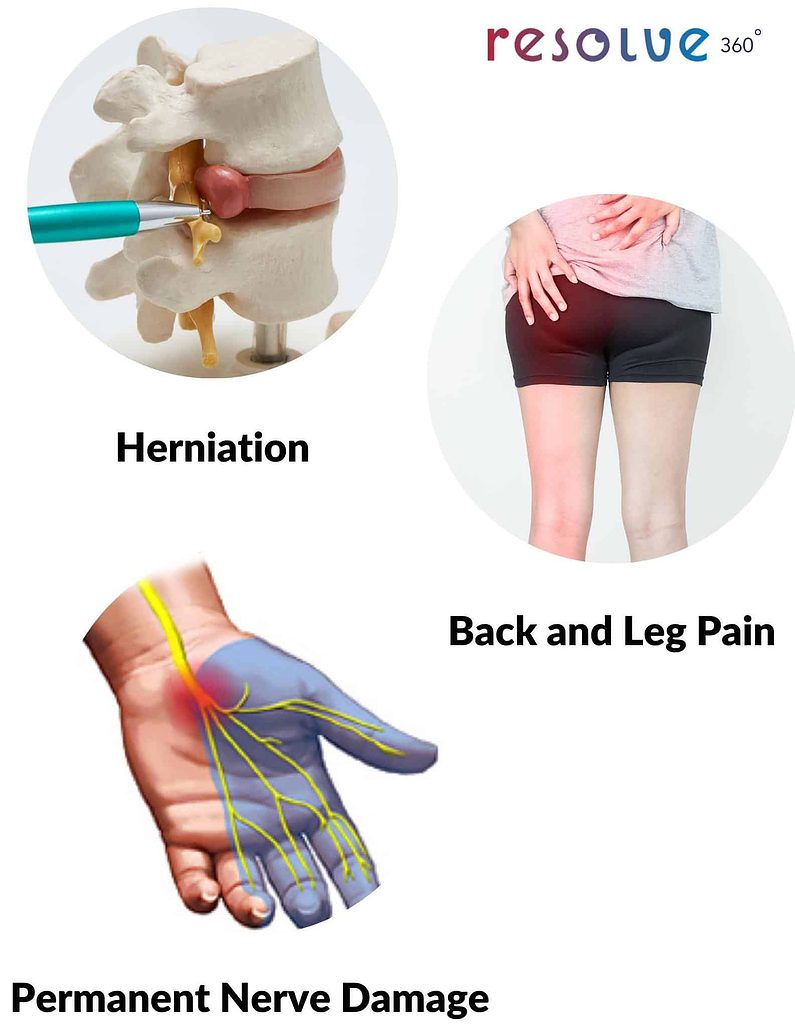
Back and leg pain: due to the affected nerves in the region, there is no proper signaling. This creates pain in and around the affected areas. The pain can be felt in the buttock, legs, arm, neck, and shoulder region depending on the position of the disc affected.
Herniation: a bulging disc is an early sign of spinal disc degeneration. Due to the continuous wear and tear of the gel in the disc, the gel might crack through the exterior portion of the disc causing it to herniate. It can cause damage to the nerve roots.
Permanent nerve damage: without any proper or delayed treatment the damaged nerve roots can cause permanent damage to the entire nerve. Which might lead to chronic back pain, numbness, tingly sensation, weakness, and loss of sensation.
How can Resolve360 help you deal with pain?
Resolve360 is a promising online platform where one can receive treatment at the comfort of their own home.
Sick patients don’t need to worry about traveling long distances to get diagnosed.
The patients can save time and utilize that time to take care of themselves.
Live sessions are conducted so that the patients can have a face to face interaction with their assigned doctors.
Building trust is really important. So, we always try our best to provide the maximum support to the patients to make them feel comfortable.
We always schedule the timings of the meetings based on the patient’s preference. Rescheduling can also be done if there are any problems.
When a patient comes to our doctor, it becomes the responsibility of our doctor to give them a healthy life.
We guarantee that the doctors will never leave their patients.
The patients can openly talk about their problems, and we assure them that the information will be between them and the doctors.
Our doctors plan every step necessary for their patients, from planning exercises to drafting their diet charts.
The doctors on the platform are highly reliable and are certified professionals with experience.
It is a platform that provides solutions to every problem, starting with home remedies to prescribed medications.
The patient’s trust is our confidence!
There is free access to knowledge and consultation. For further details, don’t forget to contact us! We will take extreme pride in serving you! Happy recovery!
Disclaimer:The above-mentioned remedies and medicines; are over the counter medicines and are effective in most cases. It is advisable to contact your doctor before taking any medications.
Dr. Apoorva Shrivastava is the founder & C.E.O. of Resolve360 and a physiotherapist with 17+ years of experience in physiotherapy and rehabilitation. She holds a Bachelor’s in Physiotherapy from Saveetha Medical College and a Master’s in Advancing Physiotherapy from Sheffield Hallam University, UK, specializing in Neuro Physiotherapy. She has supported 50,000+ patients globally and has led clinical teams across India. She is also the named inventor of Resolve360’s patented online physiotherapy clinical process methodology.
What Our Patients Say
Mr Rohit Musaddi
Rehab for Knee Pain
I have been taking sessions from March without a break. It has been a boon for my physical fitness. My issues with my fitness especially knee ligaments have been effectively taken care of and I am able to continue with active tennis daily thanks to resolve360 and Dr. David
Mr Keyur Dalwadi
Speech Therapy for his Kid
We contacted resolve360 for our child speech issue and I must say Resolve 360 team and Apoorva doing a wonderful job.
Our speech therapist Jaslia from Resolve360 is having a excellent knowledge.... Read More
Mr Ram Kumar
Physical Fitness
From being a couch potato with poor cardio respiratory system to reaching pre-athlete levels of fitness in a span of 3 months, my journey with Resolve360 and Dr.David (Physiotherapist) has been anything but magical!..... Read More
Dr Shrinivas H
Rehab for Heel Pain
I had online Physiotherapy sessions by Prerana for my heel pain. ( Tendo Achilis Sprain).
Though virtual, it was more interactive.
She was very observant throughout the sessions, correcting me while doing the exercises..... Read More
Mr Narayan Vyas
COVID19 Rehab
One of the best app available for therapy sessions online. I was covid positive, and one more my friend recommended this app, trust me, it was the best decision I have ever taken..... Read More
Ms Shilpi B
Rehab for Ligament Injury
A friend introduced me to Resolve 360 so that I could treat a ligament injury that was hindering my day to day activities. It was a bad phase! This platform is not only a.... Read More
Ms Uma Narayanan
Rehab for Back Pain
Let the year 2021 bring laughter, joy and happiness and good health. It already has, in mine and my husband Narayans life. Yes we are now freely moving around doing..... Read More
Mr Nikhil Shrivastava
COVID19 Rehab
My father’s case was worse case of covid he had severe lung damage and was in hospital for almost 40 days, My mentor here provided really great guidance and help; sessions helped so much in recovery...Read More
Ms Srishti Gupta
Rehab for Back Pain
Hello everyone
I have been regularly taking sessions from Resolve360 (from Dr Apoorva) since January 2020. I have been suffering from upper and lower back pain from last 10 years....Read More
Ms Christy J
Post Natal Care
By the advice of my gynaecologist, I found this place. I thank doctor Dr Aporva for supported me and encouraged me well even before my sessions begin. Doctor Prerna who dealt me...Read More
Ms Garima Gupta
Rehab for Neck & Back Pain
Best therapy sessions that too at home and timings are very flexible. I had a issue in my neck and lower back since almost 4 to 5 years, taken so many treatments...Read More
Ms Shubhra Jain
Prenatal Care
I took prenatal care program from Resolve 360. Dr. Preyrna was assigned to me and she has done commendable job. I did prenatal exercises under her supervision, she designed...Read More
Ms Shruti Gupta
Rehab for Scapula Dyskinesia
Resolve360 is great platform for online physiotherapy.
I was suffering from scapula dyskinesia and had lot of pain in right shoulder movement.
I was introduced...Read More
R HARISHANKAR
COVID19 Rehab
The therapy sessions were very helpful in regaining heart and lung fitness after recovering from covid. The trainers were friendly, knowledgeable and they provided a customised program depending on my fitness level and health condition.
Mr Rohit Musaddi
Rehab for Knee Pain
I have been taking sessions from March without a break. It has been a boon for my physical fitness. My issues with my fitness especially knee ligaments have been effectively taken care of and I am able to continue with active tennis daily thanks to resolve360 and Dr. David
Mr Keyur Dalwadi
Speech Therapy for his Kid
We contacted resolve360 for our child speech issue and I must say Resolve 360 team and Apoorva doing a wonderful job.
Our speech therapist Jaslia from Resolve360 is having a excellent knowledge.... Read More
Mr Ram Kumar
Physical Fitness
From being a couch potato with poor cardio respiratory system to reaching pre-athlete levels of fitness in a span of 3 months, my journey with Resolve360 and Dr.David (Physiotherapist) has been anything but magical!..... Read More
Dr Shrinivas H
Rehab for Heel Pain
I had online Physiotherapy sessions by Prerana for my heel pain. ( Tendo Achilis Sprain).
Though virtual, it was more interactive.
She was very observant throughout the sessions, correcting me while doing the exercises..... Read More
Mr Narayan Vyas
COVID19 Rehab
One of the best app available for therapy sessions online. I was covid positive, and one more my friend recommended this app, trust me, it was the best decision I have ever taken..... Read More
Ms Shilpi B
Rehab for Ligament Injury
A friend introduced me to Resolve 360 so that I could treat a ligament injury that was hindering my day to day activities. It was a bad phase! This platform is not only a.... Read More
Ms Uma Narayanan
Rehab for Back Pain
Let the year 2021 bring laughter, joy and happiness and good health. It already has, in mine and my husband Narayans life. Yes we are now freely moving around doing..... Read More
Mr Nikhil Shrivastava
COVID19 Rehab
My father’s case was worse case of covid he had severe lung damage and was in hospital for almost 40 days, My mentor here provided really great guidance and help; sessions helped so much in recovery...Read More
Ms Srishti Gupta
Rehab for Back Pain
Hello everyone
I have been regularly taking sessions from Resolve360 (from Dr Apoorva) since January 2020. I have been suffering from upper and lower back pain from last 10 years....Read More
Ms Christy J
Post Natal Care
By the advice of my gynaecologist, I found this place. I thank doctor Dr Aporva for supported me and encouraged me well even before my sessions begin. Doctor Prerna who dealt me...Read More
Ms Garima Gupta
Rehab for Neck & Back Pain
Best therapy sessions that too at home and timings are very flexible. I had a issue in my neck and lower back since almost 4 to 5 years, taken so many treatments...Read More
Ms Shubhra Jain
Prenatal Care
I took prenatal care program from Resolve 360. Dr. Preyrna was assigned to me and she has done commendable job. I did prenatal exercises under her supervision, she designed...Read More
Ms Shruti Gupta
Rehab for Scapula Dyskinesia
Resolve360 is great platform for online physiotherapy.
I was suffering from scapula dyskinesia and had lot of pain in right shoulder movement.
I was introduced...Read More
R HARISHANKAR
COVID19 Rehab
The therapy sessions were very helpful in regaining heart and lung fitness after recovering from covid. The trainers were friendly, knowledgeable and they provided a customised program depending on my fitness level and health condition.
If you would like to know more about any of the health conditions, please fill up the form below and talk to Doctors on Resolve360 directly by asking a question.
We are your doctor’s first choice and trusted by 50,000+ patients.
get a call in 15 minutes
We are your doctor’s first choice and trusted by 50,000+ patients.
Get a Call in 15 Minutes
We are your doctor’s first choice and trusted by 50,000+ patients.
Get a Call in 15 Minutes
Trust Care
We are your doctor’s first choice and trusted by 50,000+ at patients.
Happy Customers
0+
Customers Rating
0/5
Trusted Care
0%
Get a call in 15 minutes
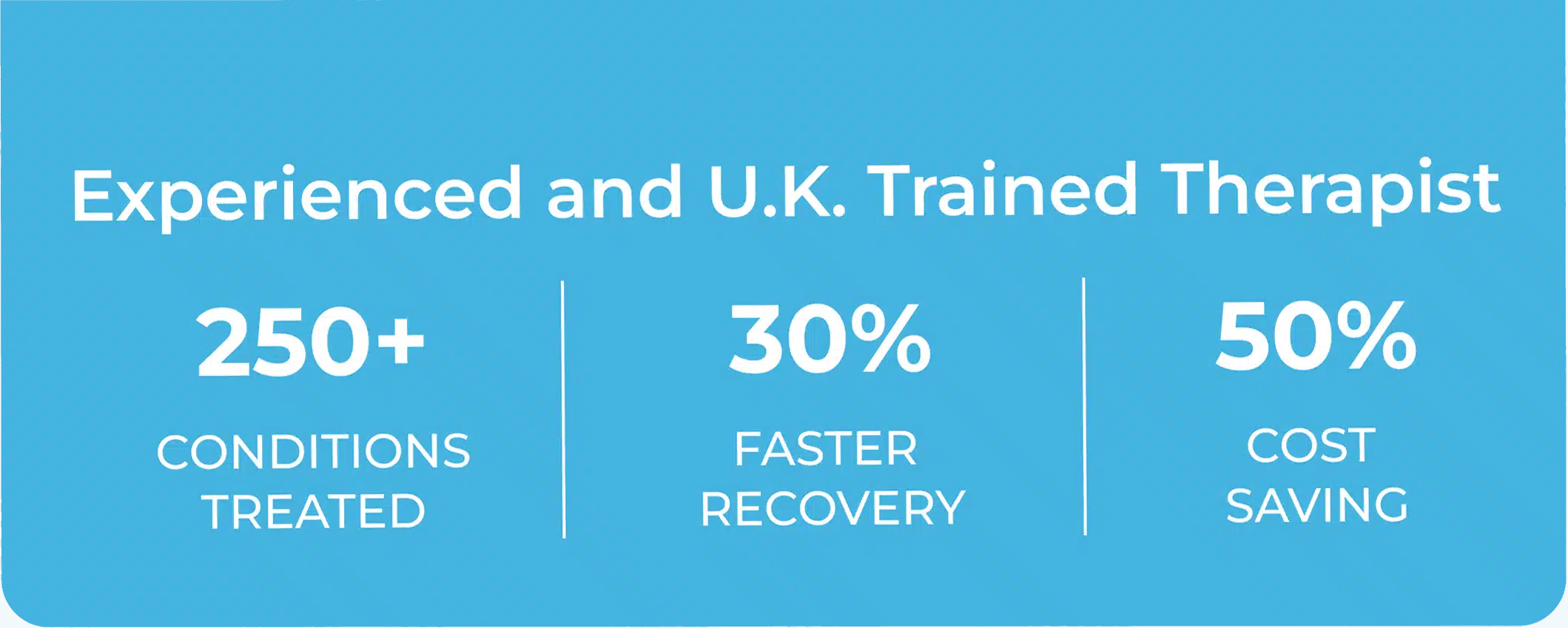
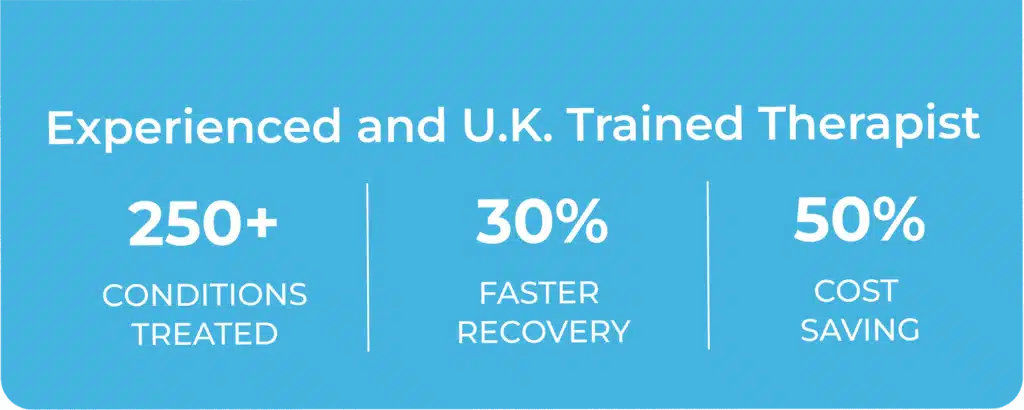
Experienced and U.K. Trained Therapist
Conditions Treated
0+
Faster Recovery
0%
Cost Saving
0%
We are your doctor’s first choice and trusted by 50,000+ patients.